The symptom pattern
The cut is going fine, and then without warning the tool bites into the timber, sometimes hard enough to stop the workpiece dead or kick the tool out of your hands. It can happen on a tool that was cutting cleanly seconds earlier, which makes it feel random. It isn’t — Record Power’s own troubleshooting section for this lathe lists exactly four causes, and all four are things about how the tool is set up and used, not a fault developing in the machine.
What’s actually happening
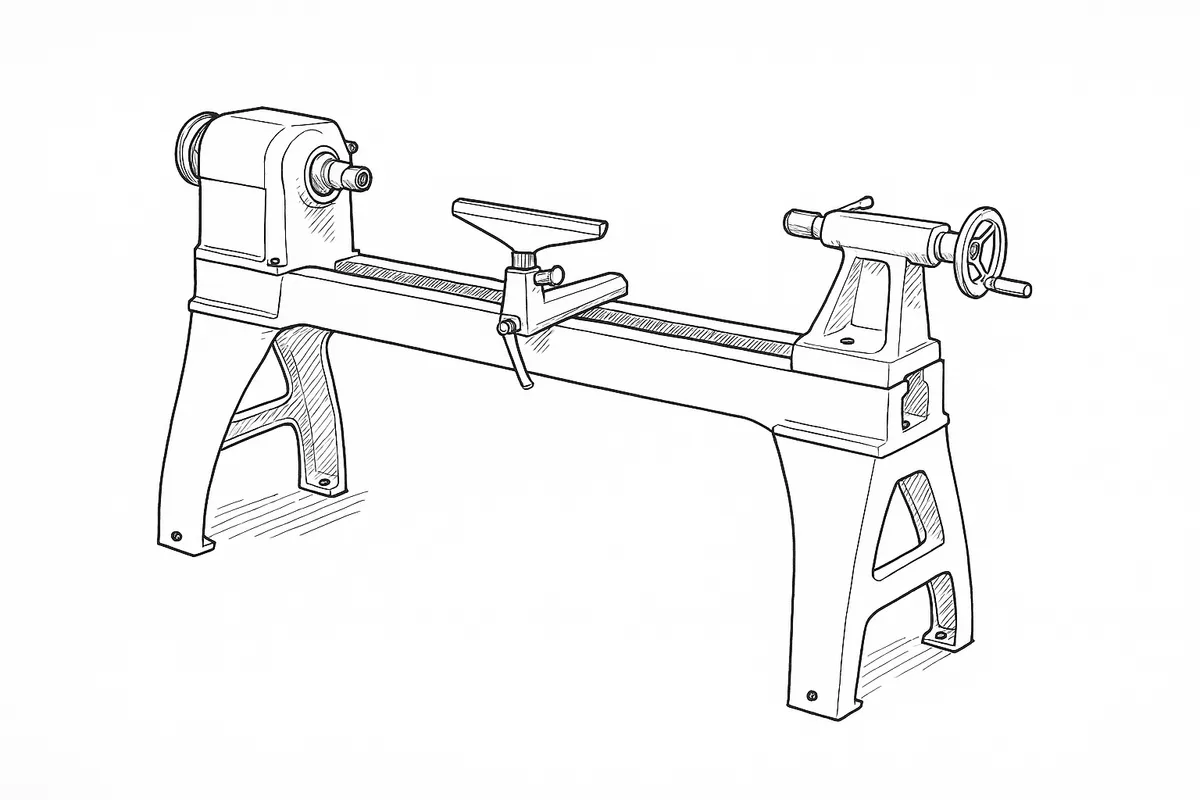
A turning tool relies on presenting its edge to the spinning wood at a specific angle and a specific distance, riding on the tool rest to do it. Change any one of those and the edge stops shearing cleanly through the fibres and starts catching instead.
A blunt edge doesn’t cut — it tears, and a torn cut catches far more readily than a sharp one. A tool rest set too low changes the angle the edge meets the wood at, which does the same thing even with a sharp tool. A tool rest set too far back leaves too much unsupported tool between the rest and the cutting edge, and that overhang can flex and drop into the timber under normal cutting pressure. And the wrong tool for the job — a tool ground for one technique used for another — simply doesn’t behave the way the cut needs it to, sharp or not.
None of these are wear or damage to the lathe. They’re all set-up.
Working through it
Switch off and unplug before you touch the tool rest — Record Power’s manual states this as standard practice for a reason, and a lathe spinning a workpiece is exactly the wrong moment to be adjusting anything near it.
Look at the tool’s edge first. If it’s dull, rounded, or has lost its bevel, that’s the most likely single cause and sharpening it is the fix. If it’s sharp, check the tool rest: it should sit at a height that presents the edge correctly to the centre of the workpiece, and close enough to the timber that only a short length of tool overhangs the rest. Record Power’s fix for the distance issue is simply moving the rest closer — there’s no adjustment more complicated than that. Finally, confirm the tool itself is the right one for the cut you’re making; a tool that’s sharp and correctly positioned can still catch if it’s the wrong shape for what you’re asking it to do.
Verdict
Worth working through in the order above before assuming anything is wrong with the lathe, because in every case Record Power names, it isn’t. Three of the four causes cost nothing — tool rest height, tool rest distance, and using the right tool are all adjustments, not purchases. Only a genuinely blunt edge needs money spent, and even then it’s a sharpening job, not a replacement.
Comments & Corrections
No comments yet. Had this fault yourself, or found something different? Tell us below.
Thanks — your comment has been sent for review. Comments are checked by a human before they appear, so expect a delay.