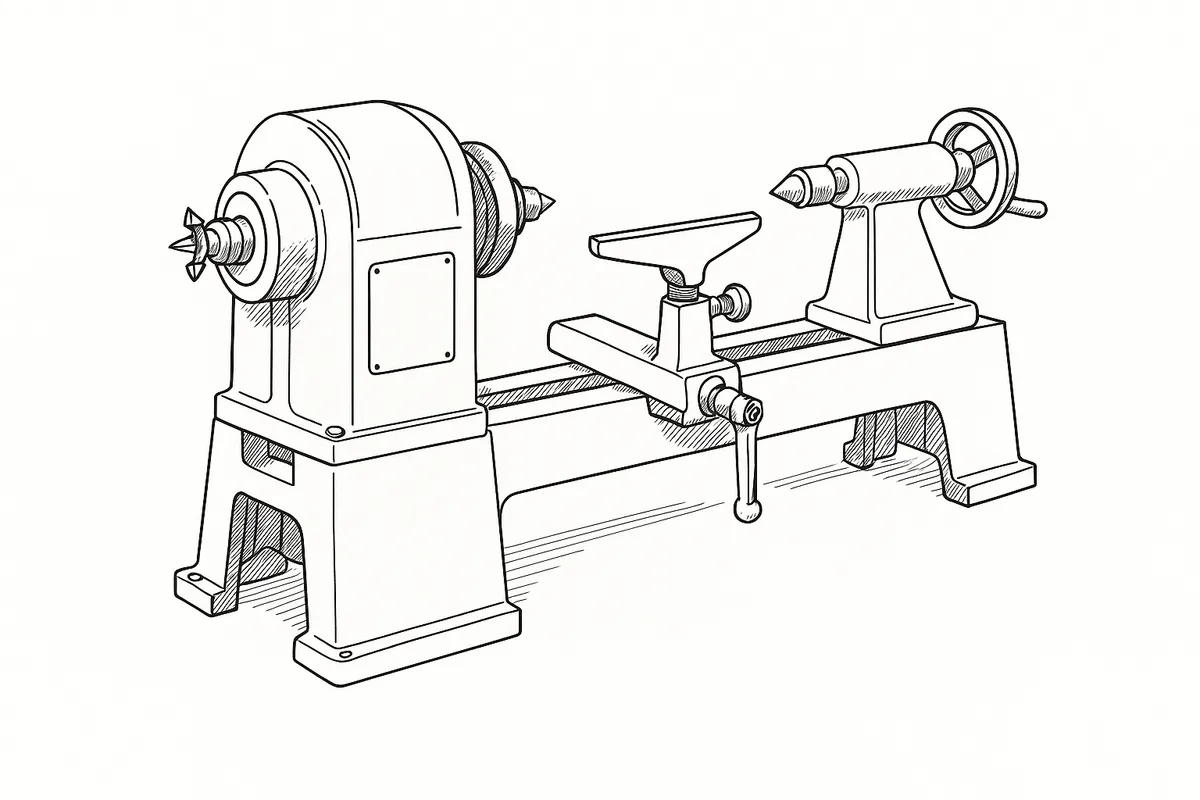
The symptom pattern
The lathe is running, then it isn’t: the spindle stops dead mid-turn and won’t move again. Try to turn it by hand and there’s no give at all — the main bearing has locked solid on the spindle. It’s an alarming way for a machine to fail, because a seized bearing gives no warning and no partial symptom beforehand; one pass it’s turning normally, the next it’s stopped.
What’s actually happening
Record Power’s own knowledge base treats this as a known, named fault on the CL2 family (shared with the CL3 and CL4), not a mystery failure. The main spindle bearing has seized inside its race — from wear, from contamination working its way in over time, or simply from age — and locked the spindle solid rather than failing gradually. It reads like a catastrophic mechanical failure. In practice it’s a bearing that needs freeing, inspecting, and either reusing or replacing, using a procedure Record Power publish specifically for this symptom.
Working through it
Isolate the lathe at the socket before doing anything else — everything from here on is hands directly on the spindle and headstock.
The bearing is held by two locking rings, and the release order matters: outer ring first, then the inner ring. With both released, tap the end of the spindle with a rubber mallet. That’s usually enough to break a seized bearing free without resorting to a puller or heat, which risk damaging the spindle or the bearing housing if used first.
Once it’s moving, take the inner locking ring off completely and the bearing slides straight out along the keyway — no special tooling needed. This is the point to actually look at it rather than assume the worst: check the inside of the bearing for heavy ridging or uneven wear. A bearing showing either of those is finished and needs replacing. One that looks clean and even can usually go straight back in.
The fix
Refitting is the reverse of removal but in a specific order: tighten the inner locking ring first, then the outer ring. Getting that sequence backwards is an easy way to end up with a bearing that isn’t seated correctly, so it’s worth following exactly.
Record Power also give a concrete way to check the setting is right rather than guessing: put the lathe on middle speed, start it, and press stop immediately. The belt — not the spindle — should turn 4 revolutions before it comes to rest. That’s their stated benchmark for a correctly set-up bearing, and it’s worth doing before putting the machine back into use, whether the bearing was reused or replaced.
Verdict
Worth doing properly rather than rushing. A locked bearing looks like the kind of failure that would write off a machine, but Record Power’s own procedure treats it as routine maintenance: free it, look at it, and only replace what the inspection actually condemns. The parts cost is modest against the machine, and the belt-revolution check at the end means you’re not left guessing whether the reassembly actually took.
Comments & Corrections
No comments yet. Had this fault yourself, or found something different? Tell us below.
Thanks — your comment has been sent for review. Comments are checked by a human before they appear, so expect a delay.