The symptom pattern
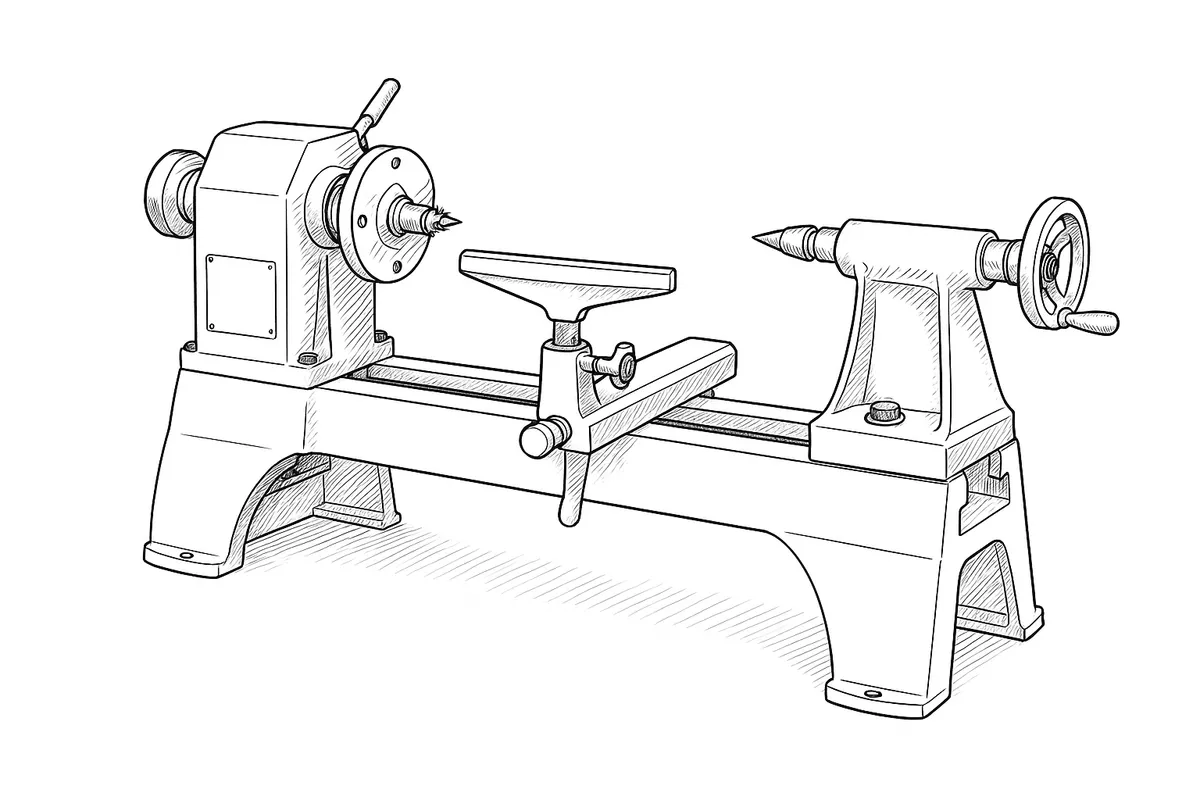
The complaint is usually put the same way: there is too much play in the headstock spindle, and the vibration that comes with it makes the lathe difficult to turn on. Cuts that used to come off cleanly now chatter, and a finish that once needed a light sanding now needs work.
It reads like a machine reaching the end of its life. On a CL3 it usually isn’t.
What’s actually happening
Record Power’s own answer to this question is worth stating plainly, because it changes the whole outlook: the CL3’s headstock bearings are designed to be adjusted, specifically so that play appearing as they wear in use can be taken back out. The detailed procedure is in the product manual. In other words, some spindle movement developing over years of turning is anticipated by the design and has a documented remedy that costs nothing.
That is the good news. The catch is that “play in the spindle” is what a lot of different faults feel like from the handles, and adjusting bearings that were never the problem wastes an afternoon and can leave the spindle worse than it started.
Working through it
Isolate the machine at the socket first — this is all hands-on-the-spindle work and there is no reason for it to be live.
Take the workpiece off and test the spindle directly. Grip the spindle nose and try to move it radially, up and down and side to side, then axially, in and out along its own axis. Those two are worth separating: they feel different and they are not the same adjustment.
Then do exactly the same test everywhere else the tool is supported, because this is where most of these end. A banjo that has stopped clamping properly, a toolrest stem that is a loose fit in it, or a tailstock barrel with slack in it all produce chatter and vibration that a turner naturally reads as spindle play. They are far more common than worn headstock bearings and much quicker to fix.
Next, rule out the work itself. An out-of-balance blank shakes the whole machine no matter how good the bearings are, and so does a chuck that is not seated square on the spindle. So does a bench or stand that flexes — a sound lathe on a springy stand feels exactly like a lathe with a loose spindle.
There is one symptom worth separating out completely. If the real complaint is a spiral pattern running along finished spindle work, Record Power point somewhere else entirely: their answer is that the most likely cause is that the centres are out of alignment, and that tool sharpness and lathe speed are the next things to check. Bearing wear is not their first suspect for that one, and stripping into the headstock to chase it would be the wrong move.
Last of all, with the drive belt slackened off, turn the spindle by hand. A bearing that is genuinely finished feels rough, notchy or noisy through the rotation. One that simply has clearance turns smoothly and just moves.
The fix
If the movement really is in the headstock and the bearings turn smoothly, the fix is the adjustment described in the CL3 manual. Follow that procedure rather than a general lathe guide — it is written for this headstock, and bearing preload is the kind of thing where over-tightening does real damage. Adjust to remove the play and no further, then check the spindle still turns freely by hand before the belt goes back on.
If adjustment no longer takes the play up, or the bearings are rough or noisy when turned by hand, they have gone past adjustment and need replacing.
Verdict
Worth fixing, comfortably. The CL3 is a substantial cast-iron machine and Record Power still support lathes decades old, so a headstock with adjustable play is not a reason to move it on.
Realistically, most owners who work through the checks above find the movement was in the banjo, the toolrest or the tailstock and never reach the bearings at all. That is the cheapest possible outcome and it is also the most likely one — which is exactly why the headstock should be the last thing you open, not the first.
Comments & Corrections
No comments yet. Had this fault yourself, or found something different? Tell us below.
Thanks — your comment has been sent for review. Comments are checked by a human before they appear, so expect a delay.