The symptom pattern
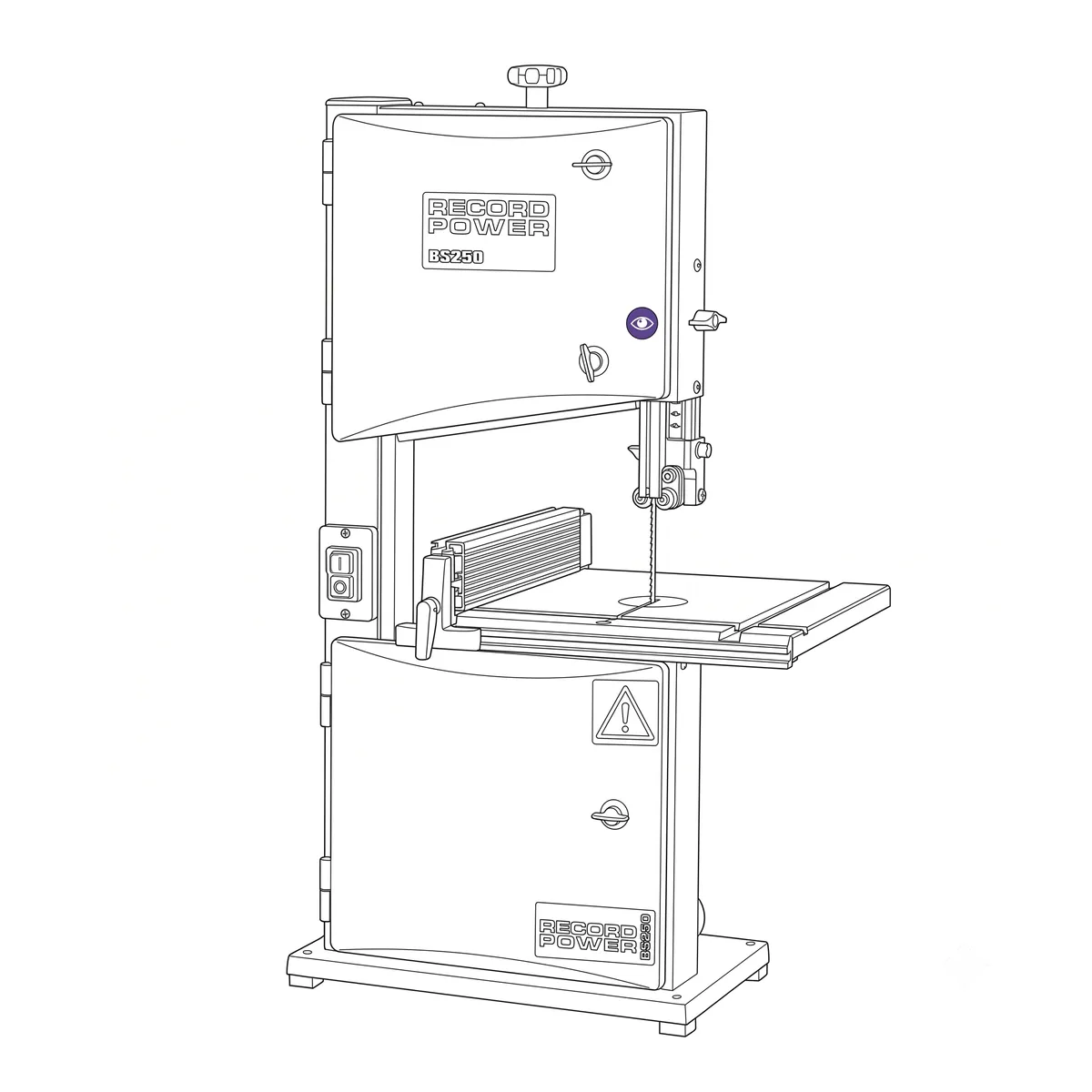
Every rip cut curves away from the fence, or the workpiece has to be fed at an angle to keep the cut on the line. New owners often assume the saw is faulty or the fence is bent; long-time owners know this as drift, and on a benchtop machine like the BS250 it’s the single most common complaint.
What’s actually happening
A bandsaw blade cuts in the direction its teeth point, and that direction is the sum of several small factors: the sharpness and set of the teeth, how much tension holds the blade rigid, where the blade tracks on the wheel crowns, and how well the guides prevent twist. When those factors are off, the blade finds its own line through the wood — and the machine gets blamed for what is, in almost every case, setup.
The blade itself deserves the most suspicion. A blade with dulled teeth on one side (from cutting into a nail, or just uneven wear) steers constantly toward the sharp side, and no amount of guide adjustment will straighten it. Stock blades supplied with benchtop machines are also routinely mediocre — the single biggest upgrade for a BS250 is a decent aftermarket blade.
Working through it
Work in order, because each step depends on the previous one. Start with a known-good blade. Tension it to the gauge marking for its width, then verify by feel — firm finger pressure mid-span should give only slight deflection. Track it so the gullets ride near the crown of the upper wheel, spinning the wheel by hand, never under power, while adjusting.
Only then set the guides, because guides adjusted around a mistracked blade lock the error in: side guides a paper’s thickness from the blade, thrust bearings just behind the back edge, top and bottom sets both. Finally, test: freehand a cut along a marked line on scrap, stop halfway, and hold the board in place. The angle it sits at relative to the mitre slot is your residual drift angle.
The fix
Most drift disappears during that setup sequence. Whatever small angle remains is a characteristic of that blade on that machine — not a defect — and the standard practice is to skew the fence to match the measured drift angle. Re-check whenever you change blades; each blade drifts slightly differently.
Verdict
No parts, no repair — a blade worth using and a methodical half-hour of setup. If a good blade at correct tension with careful guide setup still drifts badly, suspect the blade before the machine, and try a second blade before condemning anything.
Comments & Corrections
No comments yet. Had this fault yourself, or found something different? Tell us below.
Thanks — your comment has been sent for review. Comments are checked by a human before they appear, so expect a delay.