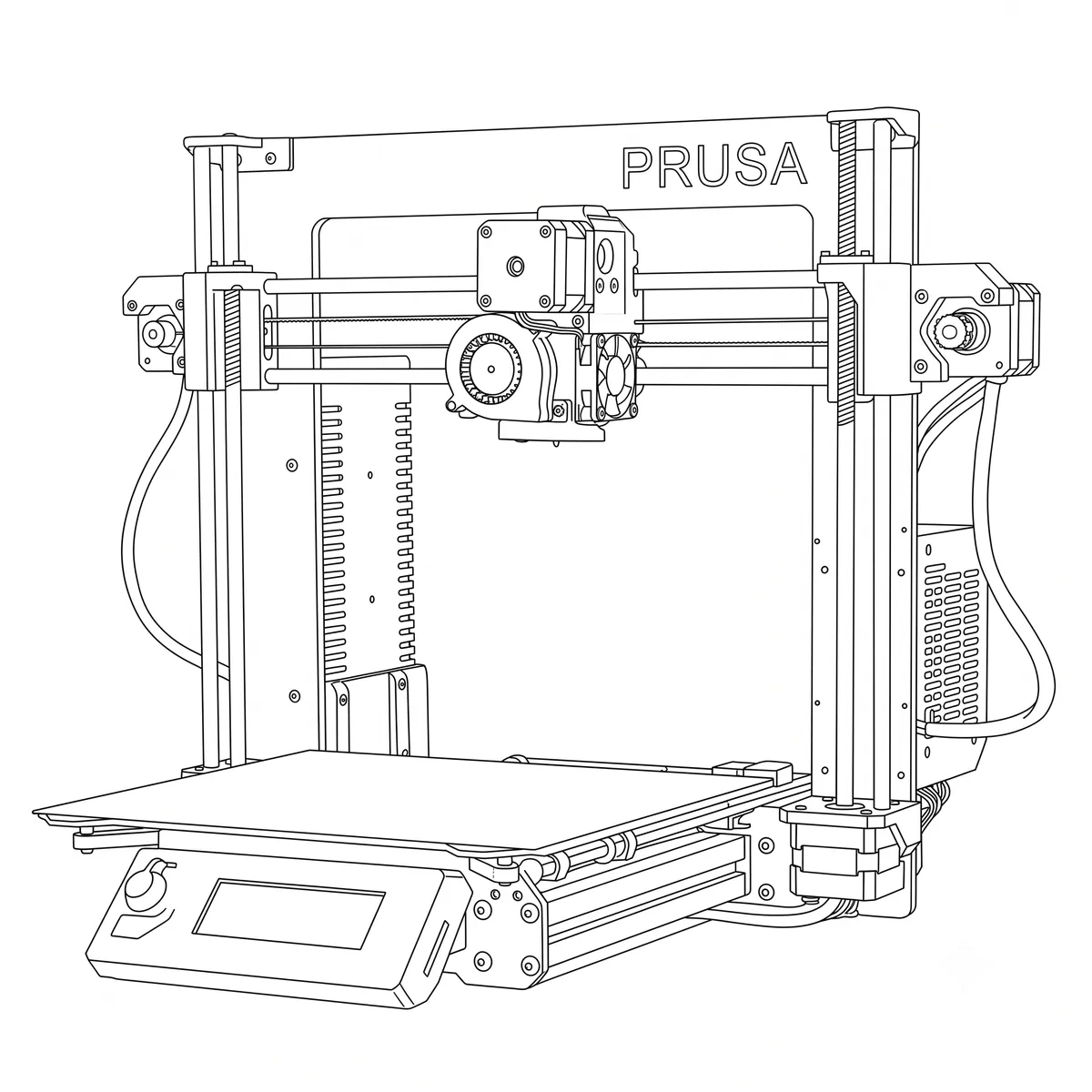
The symptom pattern
The print is going fine — first layer down, hotend holding temperature — and then the printer aborts with a thermal runaway error the moment the part cooling fan kicks in. It reads like a serious electronics fault: a failed thermistor, a failing heater cartridge, or a wiring fault in the hotend. Many owners start there, sometimes replacing several parts before the fault recurs.
What’s actually happening
The part-cooling fan blows directly across the hotend’s heater block. If that block is properly insulated with its silicone sock, the heater easily keeps up with the airflow. Without one — missing, torn, melted, or simply not seated properly — the fan can pull heat out of the block faster than the heater can replace it. The firmware watches for exactly this: a temperature drop past a threshold in a short window, and it shuts down as a safety measure against a genuinely failed heater. The safety check can’t tell the difference between “heater actually failed” and “heater is fine but losing a fight against cold air,” so a sock problem and a hardware failure look identical from the error message alone.
Working through it
Start by actually looking at the sock: is it there, intact, and correctly seated over the block? If the printer has a sock/no-sock setting in its hardware configuration, check that it matches reality — a mismatch here can trigger the same fault even with a sock fitted correctly. The strongest tell is timing: if the abort consistently happens right as the cooling fan spins up, that points at airflow, not wiring. Before swapping any parts, try temporarily lowering the part-cooling fan speed in the slicer and re-running the print — if that alone stops the runaway, the sock/airflow theory is confirmed. Only if all of that checks out normal is it worth testing the thermistor’s resistance and the heater cartridge’s continuity directly.
Verdict
Check the sock and the fan-speed relationship before touching the electronics — it’s a five-minute check that resolves the fault outright in a large share of cases, and it’s a much cheaper first step than a thermistor or heater cartridge replacement that turns out not to be needed.
Comments & Corrections
No comments yet. Had this fault yourself, or found something different? Tell us below.
Thanks — your comment has been sent for review. Comments are checked by a human before they appear, so expect a delay.