The symptom pattern
The router is mounted under a table, the spring has been taken out as Triton intends, and the above-table winder should make height changes effortless. Instead the handle is heavy, sometimes jamming outright part-way through its travel. And when the plunge lock is released to make an adjustment, the whole motor body settles a few millimetres before it stops — enough to ruin a groove depth if you were not expecting it.
Owners describe it in the same terms across UK Workshop, Router Forums and Sawmill Creek: it winds fine with a hand under it, and badly without.
What’s actually happening
Two separate things are being blamed on one fault.
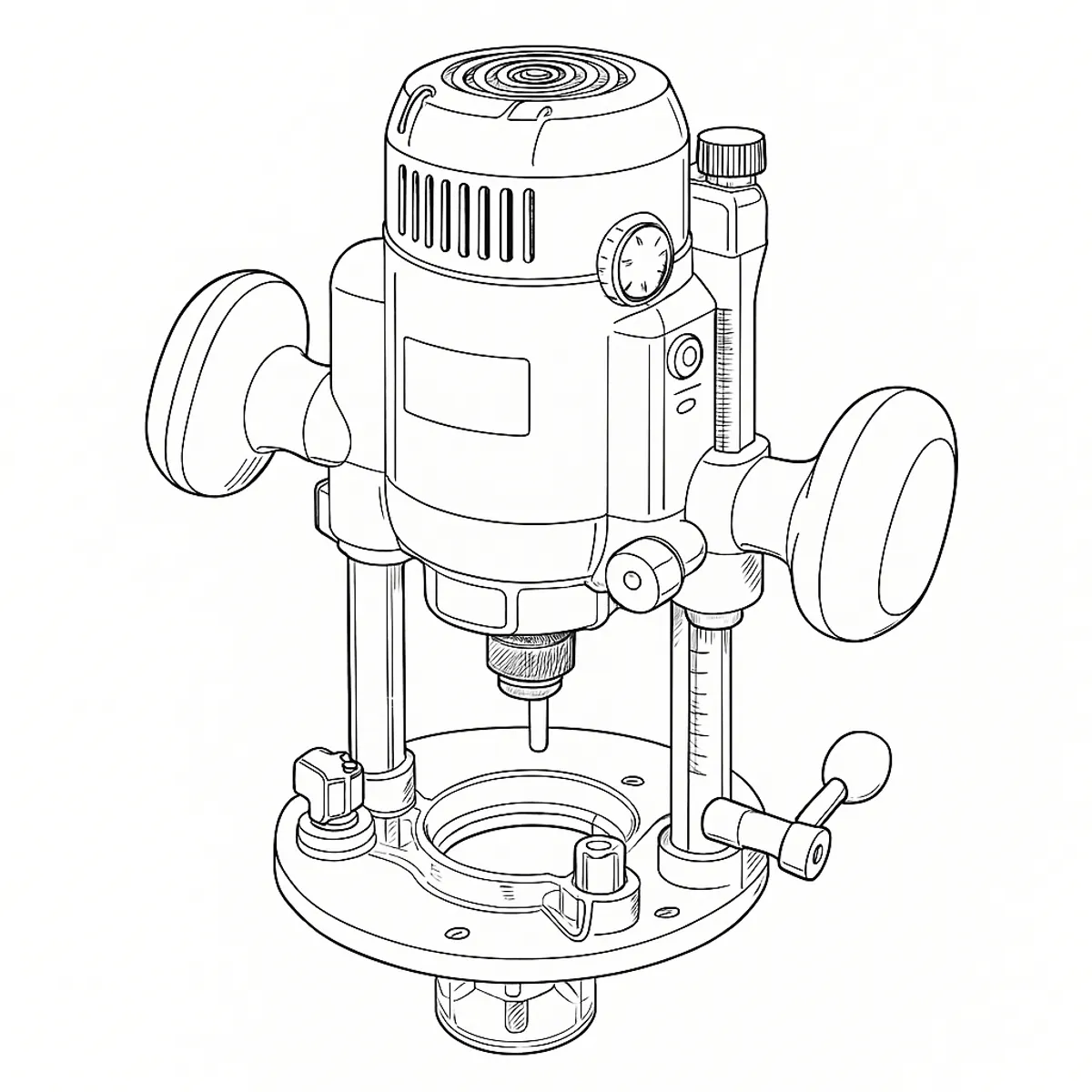
The drop is backlash. Height adjustment on the TRA001 is a rack and pinion, and a rack and pinion has clearance between the teeth by design. With the plunge return spring fitted, that clearance is held permanently in one direction because the spring is always pushing the body up. Remove the spring, as table use requires, and gravity takes over — so when the lock releases, the body falls through the free play until the teeth meet on the other side. Owners consistently put this at three to four millimetres. It is not wear, and tightening things will not remove it.
The heavy or jamming winder is the same change from a different angle. With the spring out, the winder is lifting the full weight of a 2400 W router rather than being helped by a spring, and the ratcheting gear train is doing real work. Push down on the handle while winding — the natural thing to do when it feels stiff — and you tilt the body against its plunge columns. Slightly out of parallel, the columns bind, which makes it feel heavier, which invites more pressure. Add dried resin and dust on the columns and the whole thing gets appreciably worse.
Underneath both is a plastic pinion, secured at one point by the top cover, and that is where genuine failures happen. If it is skipping or has stripped, the cover mounting and the gear itself are what to look at.
Working through it
Confirm the spring state first, because it is the single biggest determinant of how the machine feels and it is easy to get wrong. Triton’s manual is unambiguous: out for table work, in for hand-held. Refitting it for hand-held use is a safety matter, not a preference.
Then wind it unloaded. A router that runs freely with no hand pressure and binds with it is telling you the mechanism is fine and the columns are being racked. Clean the columns, use a dry lubricant, and change how you drive the handle — steady rotation, no downward push.
Finally, take the top cover off and look at the pinion. Skipping under load with clean columns and no pressure is a real fault, and the gear train is a serviceable assembly.
Verdict
Before ordering parts, work out whether you have a broken router or a router behaving the way this design behaves in a table. Most of these are the latter, and the practical answer is free: clean columns, no weight on the handle, and always creep up to your final height rather than down onto it. Where the plastic gear train has genuinely failed, it is a replaceable assembly — a sensible repair on a router that is otherwise one of the better table-mounted machines you can buy.
Comments & Corrections
No comments yet. Had this fault yourself, or found something different? Tell us below.
Thanks — your comment has been sent for review. Comments are checked by a human before they appear, so expect a delay.