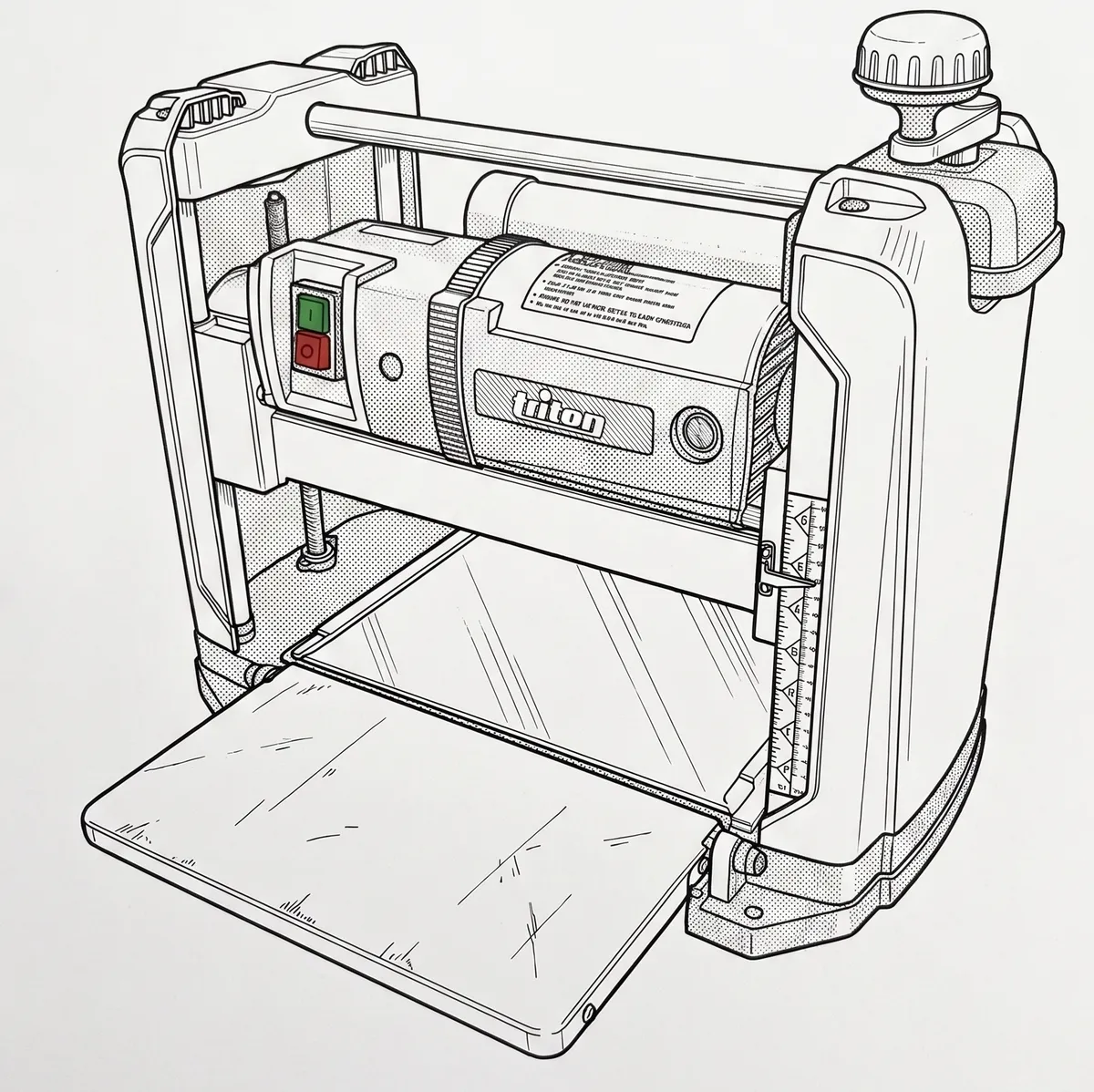
The symptom pattern
The TPT125 uses a universal (brushed) motor, and the reported failure pattern is consistent: visible sparking through the motor vents during cuts, the motor bogging down on passes it previously handled comfortably, and a sharp ozone or burnt-varnish smell after running. Heavy, continuous sparking at both brush positions — even with no cutting load — points at the commutator/brush interface rather than at the switch, lead, or drive train.
Working through the diagnosis
Some brush sparking is normal for a universal motor; showering sparks are not. With the machine unplugged and the brushes removed, the commutator surface tells most of the story:
- Even blackening or ridging across all segments indicates a surface and brush problem — glazed or pitted brush faces arcing against a dirty or worn commutator. This is the recoverable case.
- One or two burnt segments with the rest clean suggests a shorted armature winding dumping current through that segment pair. Confirm with a segment-to-segment resistance check: readings should be low and consistent all the way around the commutator. An anomalous pair means the armature itself has failed.
Brushes that are within length spec can still be the problem if their contact faces are glazed or pitted — prolonged arcing damages the face long before the brush wears short. Weak or heat-discoloured brush springs produce the same arcing by failing to hold the brush firmly against the commutator.
The fix
For light glazing and blackening, the commutator can be cleaned in place without tearing the motor down. With the machine unplugged and the brushes removed, wrap a thin strip of 400-grit sandpaper over the tip of a lollipop stick, press it gently against the commutator through the brush holder opening, and spin the wheel by hand to rotate the armature against the abrasive. Work in complete revolutions until the copper brightens evenly, then vacuum the dust out of the housing before refitting the brushes. Use plain sandpaper or glass paper — not emery cloth, whose conductive grit can embed in the copper and cause the arcing you’re trying to cure.
For heavier ridging the commutator needs a proper skim in a lathe. Either way, fit a new pair of brushes and bed them in by running the machine unloaded before returning it to full cuts. Brush sets for the TPT125 are inexpensive and widely available.
For a shorted armature, the repair is a replacement armature — check current pricing against the machine’s value before committing, as availability and cost vary.
Verdict
Worth diagnosing properly before condemning anything. The common case — dirty commutator plus tired brushes — is one of the cheapest repairs in the workshop. The uncommon case, a failed armature, is the point where replacement machine pricing enters the conversation.
Comments & Corrections
No comments yet. Had this fault yourself, or found something different? Tell us below.
Thanks — your comment has been sent for review. Comments are checked by a human before they appear, so expect a delay.