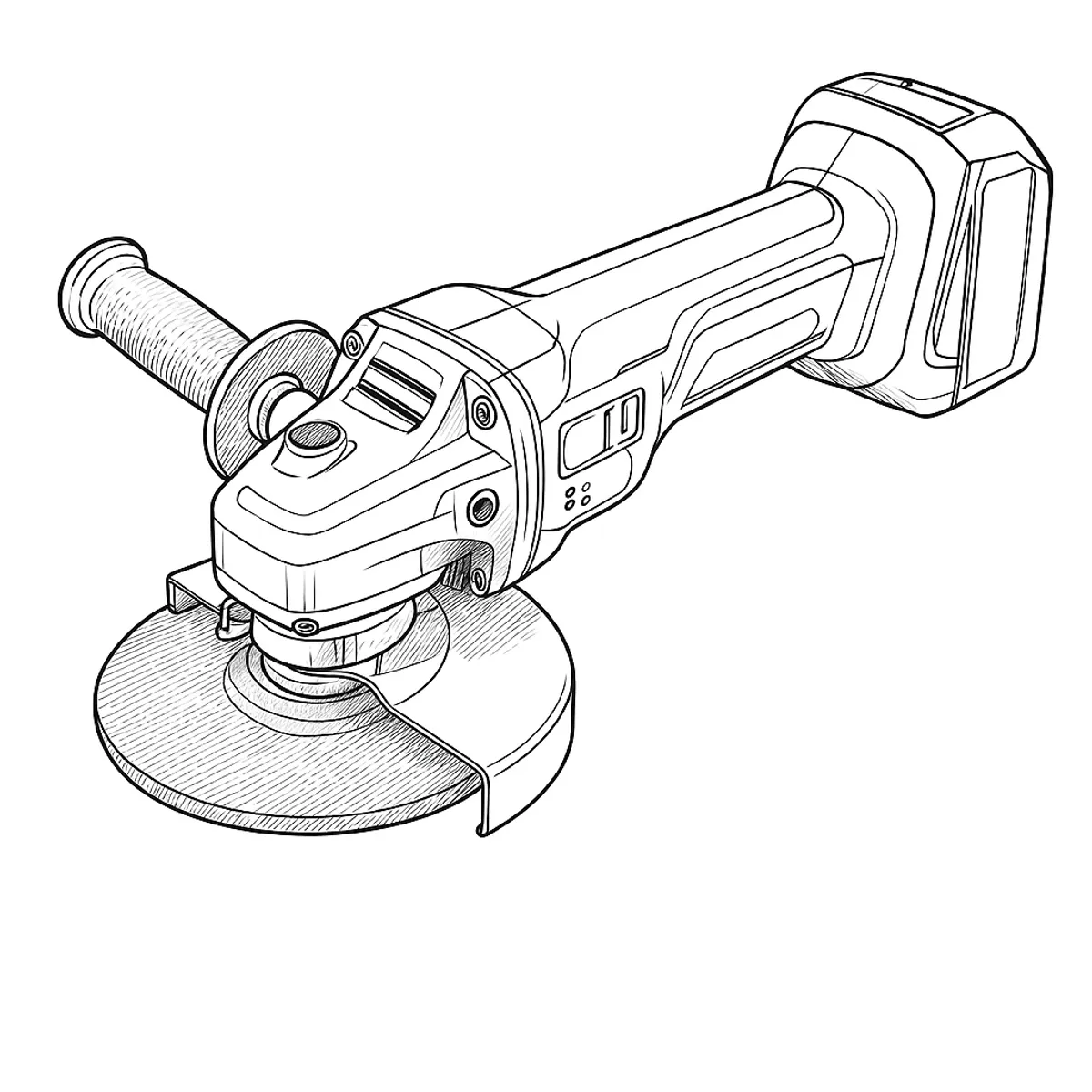
The symptom pattern
The grinder is cutting or grinding normally, and then it just stops — no grinding noise slowing down, no warning, the wheel simply isn’t turning anymore. Pull the trigger again and sometimes it fires straight back up; other times it does nothing at all, as if the battery had been pulled out. Both are the same underlying system behaving differently depending on why it tripped.
What’s actually happening
The DGA408 (and the 458 and 508, which share the same electronics and manual) runs a tool/battery protection system with four distinct trip conditions, and Makita documents each one separately rather than lumping them into one generic “fault.” Overload protection fires when the tool draws abnormally high current — leaning too hard into a cut, or a wheel starting to bind — and Makita’s own wording is that it “stops without any indication,” which is exactly the alarming, silent cutout owners report. Overheat protection is the one that follows hard, sustained use: the battery indicator blinks, and the fix is simply time. Overdischarge protection is a battery genuinely run down too far to continue safely.
The one that catches people out is what Makita calls the protection lock: if the system trips repeatedly in a short space of time, the tool refuses to start even after switching off and back on, and there’s no separate indicator to say that’s what’s happened — it just looks dead.
Working through it
Turn the tool off and on and try the trigger once. If it runs, that was overload protection and nothing more needs doing beyond easing off next time. If it doesn’t restart, look at the battery indicator: a blinking light means heat, and cooling the tool (or the battery, if that’s what’s overheated) is the only fix Makita gives — there’s no separate cooldown timer to watch, just wait and retest.
If the indicator instead shows the battery low rather than blinking, take it off and put it on the charger — that’s overdischarge, not a fault.
If none of that applies and the trigger simply does nothing no matter how many times the tool is switched off and on, that’s the protection lock. The only way Makita gives to clear it is to remove the battery, set it on the charger, and let it finish a full charge cycle before refitting it — this is the step that’s easy to miss, because switching the tool itself off and on looks like it should work and doesn’t.
Verdict
Every cause Makita documents for this symptom clears for free — a pause, a cooldown, or a recharge, never a part or a repair. A battery that won’t hold charge afterwards is a normal wear item rather than evidence of a grinder fault. If the tool still won’t run once overload, overheat, overdischarge and the protection lock have all been ruled out, that’s past what Makita’s own documentation covers, and worth a service centre rather than further self-diagnosis.
Comments & Corrections
No comments yet. Had this fault yourself, or found something different? Tell us below.
Thanks — your comment has been sent for review. Comments are checked by a human before they appear, so expect a delay.