The symptom pattern
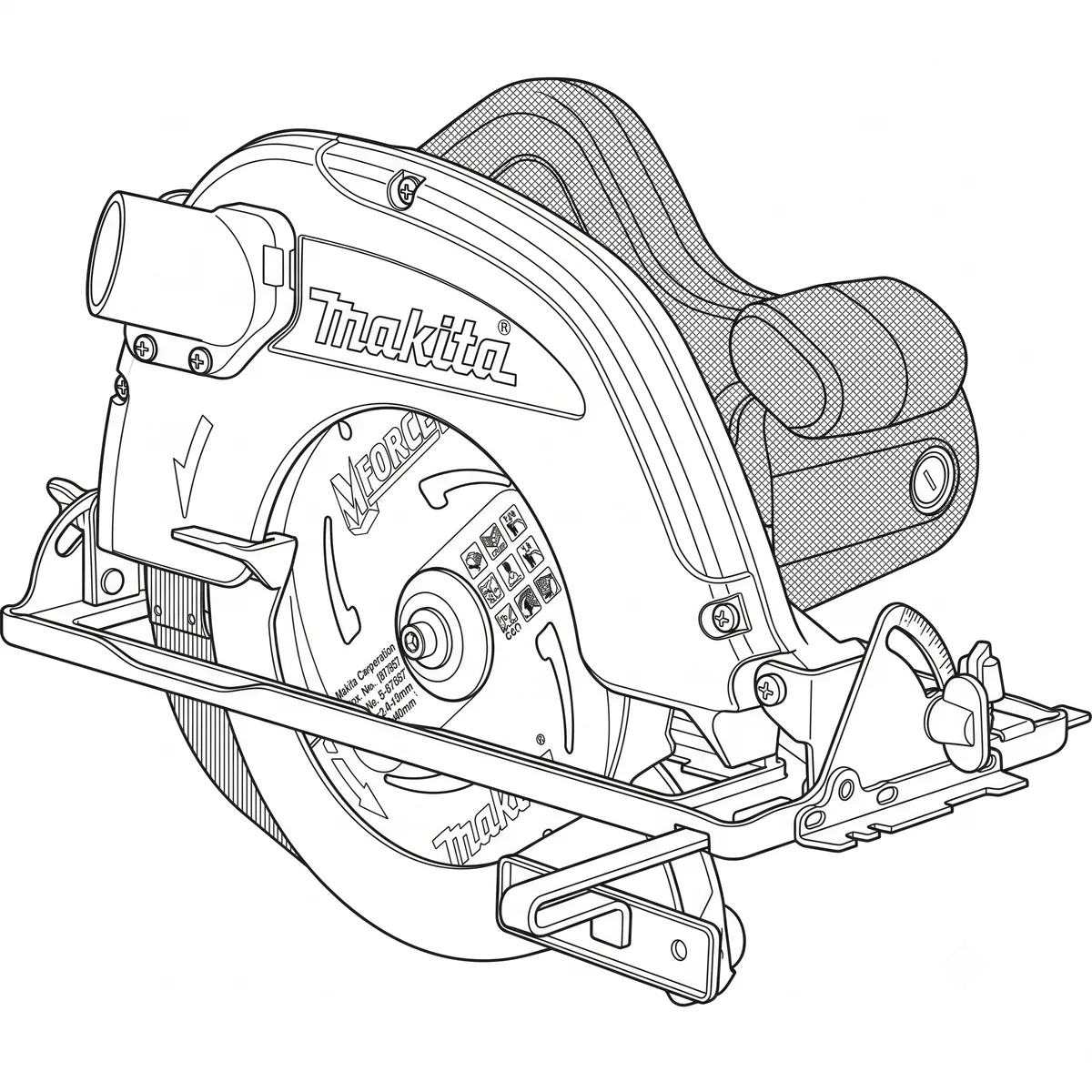
At the end of a cut the lower guard is supposed to snap back over the blade the instant the saw clears the wood. Instead it drifts back lazily, or stops halfway, or waits for a flick of the retract lever. Owners get used to it by degrees, which is exactly the problem — this fault has a habit of being tolerated right up until a still-spinning, unguarded blade meets a thigh or a bench.
It’s worth stating plainly: a slow lower guard is not a cosmetic annoyance. It’s the one fault on this page that can put you in hospital while the saw itself runs perfectly.
What’s actually happening
The lower guard rotates on a ring around the blade housing, pulled shut by a torsion spring. That ring gap sits directly in the path of the dust stream, and softwood resin plus fine dust bakes into a sticky varnish inside it. The spring only has so much torque; as the varnish builds, the guard slows, then sticks. The 5704R is a workhorse saw that tends to see years of softwood and sheet material, so most examples get here eventually.
The less common causes are mechanical: a return spring that has stretched or jumped its seat, or a guard rim dented in a drop so it scrapes the housing at one point in its travel — the drag in that case is felt at a specific spot rather than evenly.
The fix
With the saw unplugged, clean the pivot ring gap thoroughly: resin solvent or white spirit on a brush, worked in while cycling the guard, until it moves freely, then blow it dry. Lubricate with a dry PTFE or silicone spray only. Oil and grease feel like an improvement for a week, then collect dust into a paste and recreate the fault worse than before.
If the guard is free but still lazy, replace the return spring — it’s on the parts diagram and costs little. A bent guard should be replaced rather than bent back; its geometry is what keeps it clear of the blade.
Verdict
Ten minutes with solvent fixes almost every case, and the parts for the rest are cheap. The verdict that matters is the safety one: this is a stop-using-the-saw fault until fixed, and wedging or tying the guard open is never an acceptable workaround — that modification has a well-documented casualty record.
Comments & Corrections
No comments yet. Had this fault yourself, or found something different? Tell us below.
Thanks — your comment has been sent for review. Comments are checked by a human before they appear, so expect a delay.