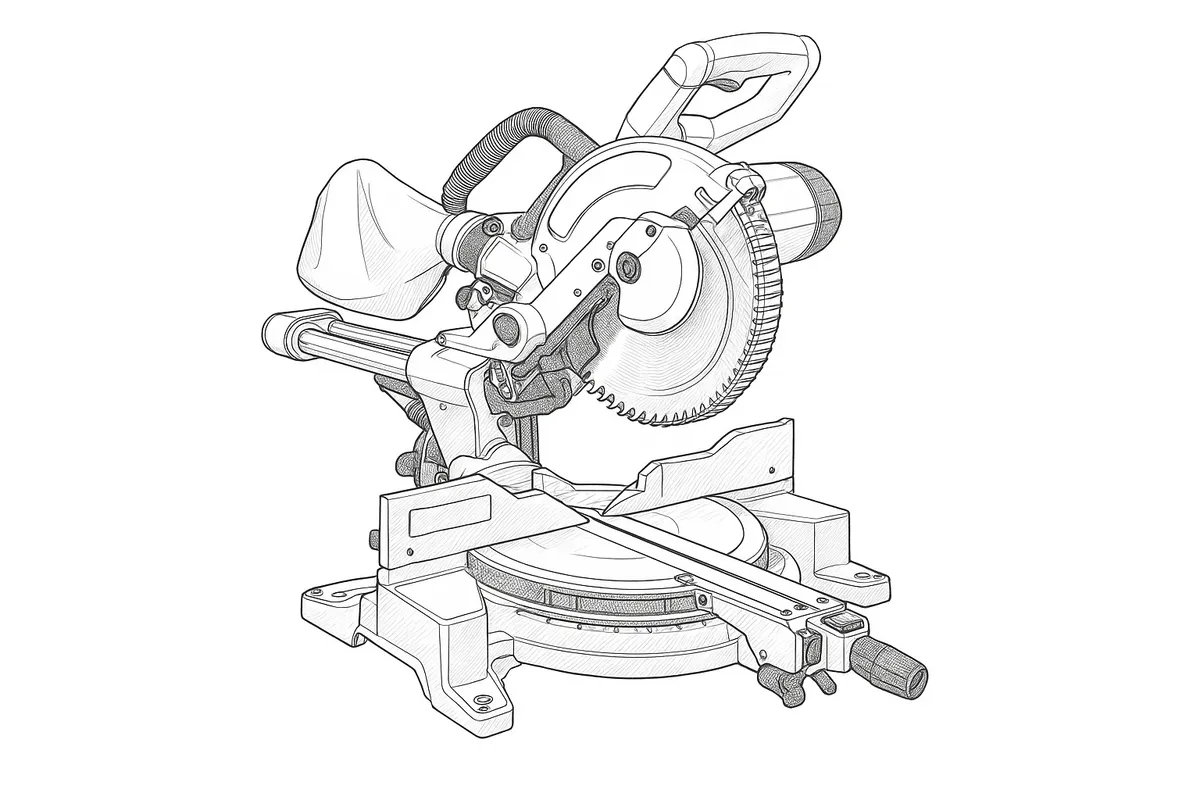
The symptom pattern
You release the trigger and the blade keeps turning. On a saw with an automatic electric brake that feels alarming, because the whole point of the brake is that the blade stops promptly rather than coasting down. Owners usually notice it as a change rather than an event: the saw used to stop almost as soon as the trigger came off, and now it runs on for noticeably longer.
The first thing worth doing is checking whether anything is actually wrong. DeWalt’s own figure for the DWS780 is that the automatic blade brake stops the blade within 5 seconds of trigger release, and the manual states this timing is fixed rather than something that can be adjusted. A blade that takes a couple of seconds is working as designed.
What’s actually happening
DeWalt’s manual is unusually direct about this fault, because it describes the exact symptom itself rather than leaving it to be inferred: “On occasion, there may be a delay after trigger release to brake engagement. On rare occasions, the brake may not engage at all and the blade will coast to a stop.”
That is a documented characteristic of the electric brake, not necessarily a sign of a failing part. The brake works by reversing current through the motor via the same brushes that drive it in normal running, and DeWalt’s prescribed first response treats an occasional misfire as something the switching can clear on its own: “If a delay or ‘skipping’ occurs, turn the saw on and off 4 or 5 times.”
Only if that doesn’t clear it does the manual point further — to having the tool serviced. Worn motor brushes are one of the causes it lists for the saw’s other electrical symptoms, and a brake that depends on brush contact is a plausible mechanism, but DeWalt doesn’t publish a wear limit or a replacement procedure for this saw the way some tools’ manuals do. Both “cord damaged” and “brushes worn out” resolve to the identical instruction in the troubleshooting table: have it done by an authorized service centre.
Working through it
Unplug the saw first. This is a check on and around the motor’s electrical circuit, and the trigger is easy to catch with a sleeve while you’re leaning over the housing.
Try the manual’s own fix before anything else: switch the saw on and off four or five times. It costs nothing, it’s what DeWalt specifies for exactly this symptom, and it resolves the occasional case the manual describes as normal rather than faulty.
If the brake is still slow or absent afterwards, this is the point to stop diagnosing yourself. DeWalt doesn’t publish a brush-inspection or replacement procedure for the DWS780 — the manual’s own warning is explicit that brush inspection and replacement “should be performed by a DeWALT factory service center,” and the troubleshooting table sends worn brushes the same way. There’s no wear-limit figure to measure against because DeWalt doesn’t intend the owner to open that part of the tool.
Verdict
Try the on/off cycle first — it’s free, it’s documented, and it fixes the occasional case DeWalt itself describes. If the brake still doesn’t engage properly after that, treat it as a service job rather than a consumable swap: get the saw looked at by an authorized DeWalt service centre before relying on it again. A blade brake is a safety feature, and DeWalt’s own manual is clear that it isn’t a substitute for confirming by eye that the blade has actually stopped before you lift it out of the cut.
Comments & Corrections
No comments yet. Had this fault yourself, or found something different? Tell us below.
Thanks — your comment has been sent for review. Comments are checked by a human before they appear, so expect a delay.