The symptom pattern
In thin material the saw cuts fine. In an 18mm worktop or a 45mm softwood board, the cut drifts off the line, and when you look at the cut edge it’s not vertical — the blade has leaned over inside the material, sometimes badly enough that the underside of the cut is millimetres away from where the top says it should be. Setting the base plate to exactly 90° changes nothing, which is the clue that this isn’t an adjustment problem.
What’s actually happening
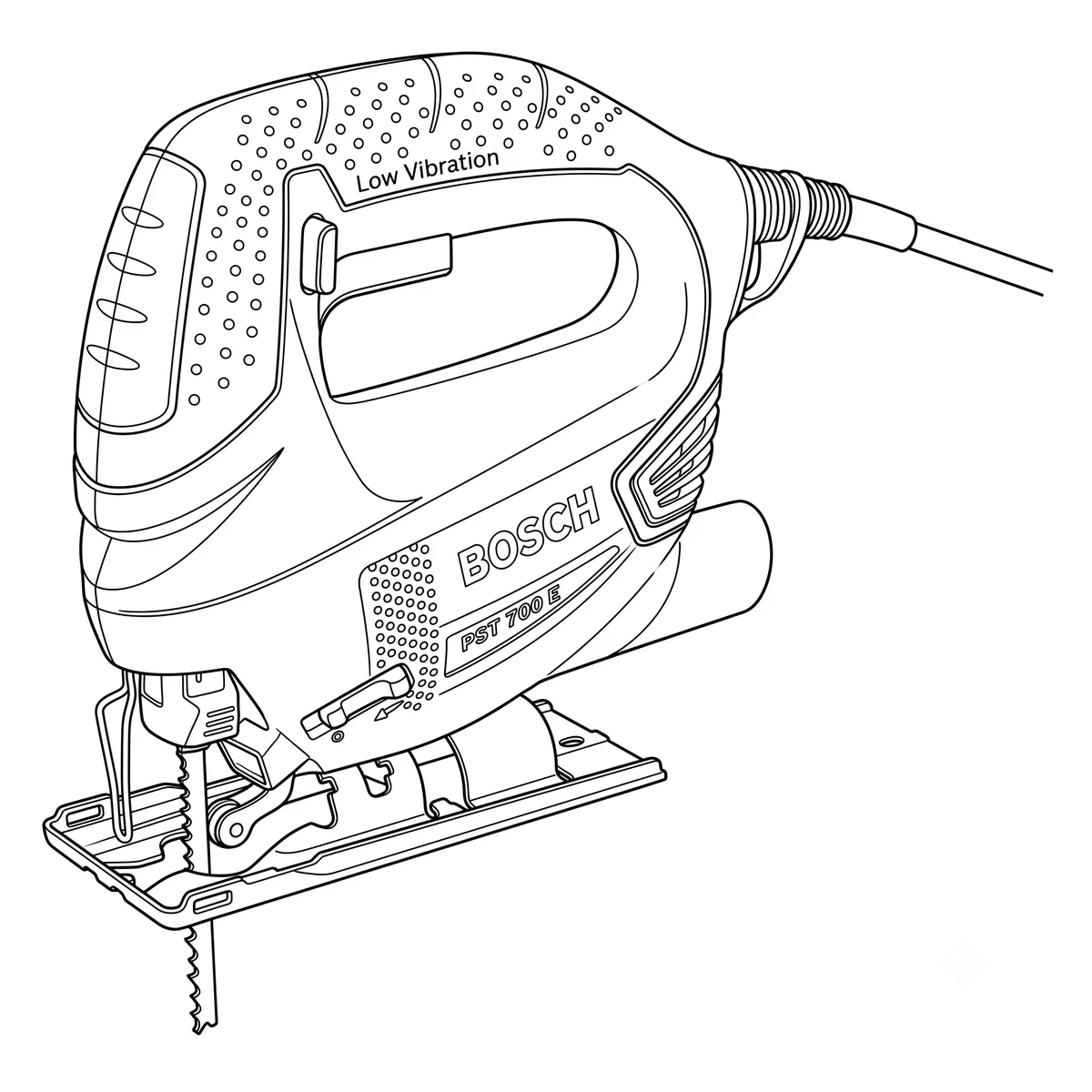
A jigsaw blade is a thin strip of steel supported only at the top. In thick material, side forces — a dull edge cutting unevenly, grain steering the teeth, the user pushing the saw back onto a drifting line — flex the free end of the blade sideways. The base plate stays perfectly square while the blade bends beneath it; the bevel is created inside the cut. Deeper stock means a longer unsupported blade and more leverage, which is why the fault scales with thickness.
Everything that resists deflection helps: a stiffer, wider blade, sharp teeth that cut rather than push, a slow feed that doesn’t load the blade, and a healthy support roller backing the blade up. Everything that aggravates it — the worn general-purpose blade in the saw since last year, a fast feed, steering mid-cut — makes the lean worse.
Working through it
The blade is the suspect until proven otherwise: sight down it for a set bend (a blade that’s been leaned on stays bent, and every subsequent cut follows the bend), and start any diagnosis with a new blade of the correct type for the material and thickness. Check the support roller behind the blade — on a well-used saw the blade can wear a groove into the roller face or the roller can seize, and either lets the blade wander unsupported.
Then test honestly: fresh stiff blade, thick scrap, slow feed, no steering. If that edge comes out square, the technique and blade were the whole story.
Verdict
Blades and patience, not repairs. Buy proper blades for thick stock, replace them before they’re fully dull, let the saw set the pace, and treat the support roller as the one part worth inspecting. And if the job is a long straight cut in thick worktop, that’s a circular saw’s job — a jigsaw will always be the wrong tool doing its best.
Comments & Corrections
No comments yet. Had this fault yourself, or found something different? Tell us below.
Thanks — your comment has been sent for review. Comments are checked by a human before they appear, so expect a delay.