The symptom pattern
The sander runs fine and the motor sounds healthy, but the belt doesn’t stay where it should — it creeps toward one edge of the rollers as you work, or in the worst case walks right off while sanding. It’s one of two things Triton’s own troubleshooting table names for this machine, and both are adjustments rather than repairs.
What’s actually happening
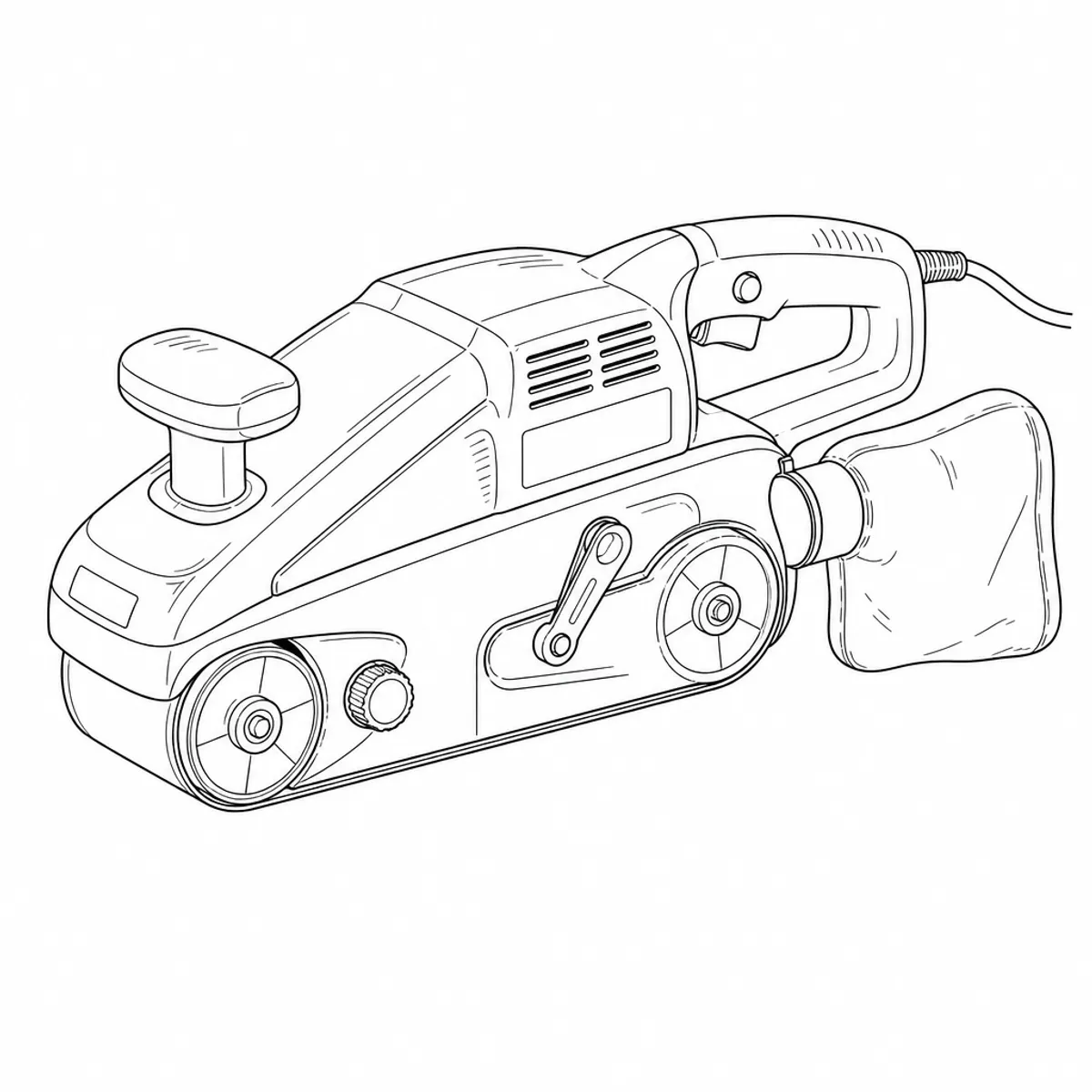
A belt sander keeps its belt centred two ways: tension, which is set by a lever, and tracking, which is set by a dedicated knob that tilts one roller slightly to steer the belt. If the tension lever isn’t fully closed, the belt runs loose and wanders regardless of how well the tracking is set. If tension is fine but the tracking knob has drifted or was never set for this belt, the belt simply isn’t aimed at the centre of the roller and walks toward whichever side it’s biased to.
Working through it
Unplug the sander before touching either control — Triton’s manual is explicit about this for any inspection or adjustment. Start with the tension lever: it should close firmly, holding the belt under proper tension. A lever that doesn’t fully engage is the simpler of the two faults to rule out and costs nothing to check.
If tension checks out, the tracking knob is next. Reconnect the sander, run the belt briefly and watch where it drifts, then turn the Tracking Adjustment Knob to walk it back toward the centre of the drive roller — only a slight turn moves it, so make small adjustments rather than large ones. Squeeze the trigger for a few seconds after each turn to let the belt find its new line, then run the sander for roughly a minute before trusting it on a workpiece. That minute-long run is Triton’s own confirmation step, not an extra precaution layered on top.
If the belt still won’t hold centre after both checks, Triton’s own troubleshooting table escalates to a full refit rather than further adjustment — release the tension lever, slide the belt free, then work through the fitting procedure again: check the edges for fraying or damage, confirm the rotation arrow printed inside the belt points the same way as the arrow marked on the sander body, slip it back on and re-tension.
Worth knowing separately: if the fault is actually a squealing sound or power that comes and goes while sanding, rather than drift, Triton’s table treats that as a worn drive belt — a different internal part with its own replacement procedure, not something the tracking or tension adjustments touch.
Verdict
This is a two-step adjustment job, not a repair, and both steps are free. Check the tension lever before the tracking knob — it’s the quicker of the two to rule out — and don’t buy a replacement belt until you’ve actually had the current one off and looked at which way it’s fitted.
Comments & Corrections
No comments yet. Had this fault yourself, or found something different? Tell us below.
Thanks — your comment has been sent for review. Comments are checked by a human before they appear, so expect a delay.