The symptom pattern
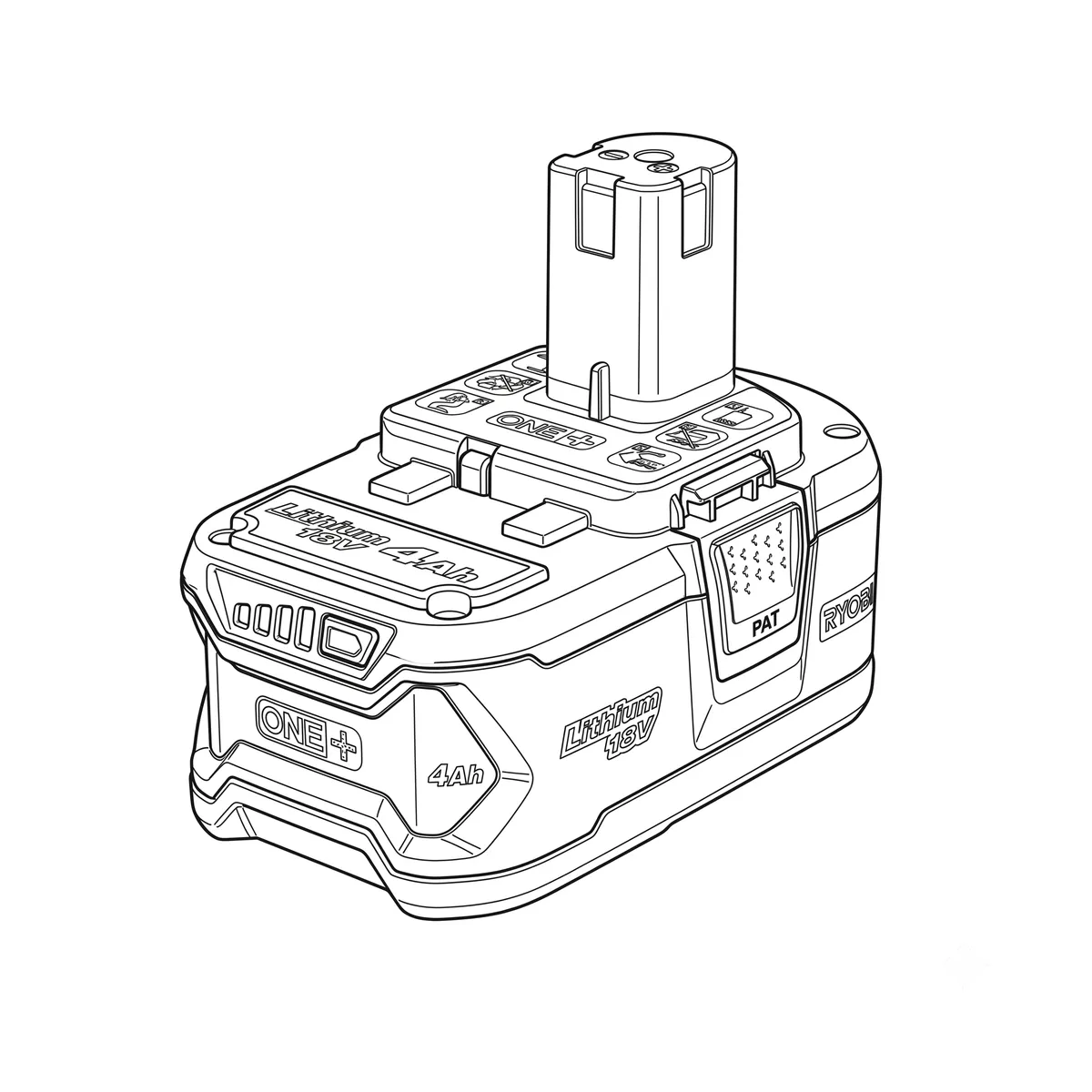
A battery that worked fine goes into a drawer for a few months, and on its return the charger immediately shows its defective indication and refuses to charge. The pack shows no damage and was never abused. This pattern — fine before storage, “defective” after — is reported constantly across every cordless platform, and Ryobi’s ONE+ range is no exception.
What’s actually happening
First, the question everyone asks: is it the battery or the charger? It’s the battery — and usually the battery isn’t broken either. The charger is doing exactly what it’s designed to do; the “defective” light describes the battery’s state, not the charger’s opinion of itself. (Step one of the diagnosis still swaps packs and chargers around, because a genuinely dead charger or dirty contacts produce the same picture — but they’re the rare case.)
Here’s the mechanism. Lithium-ion packs self-discharge slowly in storage, and the pack’s electronics draw a small current on top. Store a partly flat pack for long enough and the cells sink below the minimum voltage the charger is designed to accept. The charger can’t tell the difference between “healthy but over-discharged” and “genuinely failed”, so it errs on the side of caution and rejects the pack.
That caution exists for a reason. Cells held below their minimum voltage for long periods can develop internal damage that makes recharging them genuinely hazardous. The recovery approach below is for packs that spent a manageable time slightly under the cutoff — not for packs that read near zero volts or have sat flat for years.
Working through it
First eliminate the cheap explanations: test the charger with a known-good pack, and clean both sets of terminals — a film of workshop dust produces the same rejection as a flat cell. Then measure the pack voltage across its main terminals. Just under the cutoff is the recoverable case; a reading near zero, or any swelling or smell, means the pack is scrap.
For the recoverable case, the widely reported technique is charge-burst cycling: insert the pack, leave it a few seconds, pull it out, reinsert, and repeat. Each burst nudges the voltage up before the charger’s rejection logic trips, and after a number of cycles the pack crosses the threshold and charges normally. Supervise the first full charge and check the pack doesn’t get more than mildly warm.
Verdict
Zero-cost fix in the common case. Prevent the recurrence by storing packs around half charge rather than empty, and topping them up every few months. Never attempt to recover a swollen, damaged, or near-zero pack, and never charge any recovered pack unattended for the first cycle.
Comments & Corrections
No comments yet. Had this fault yourself, or found something different? Tell us below.
Thanks — your comment has been sent for review. Comments are checked by a human before they appear, so expect a delay.