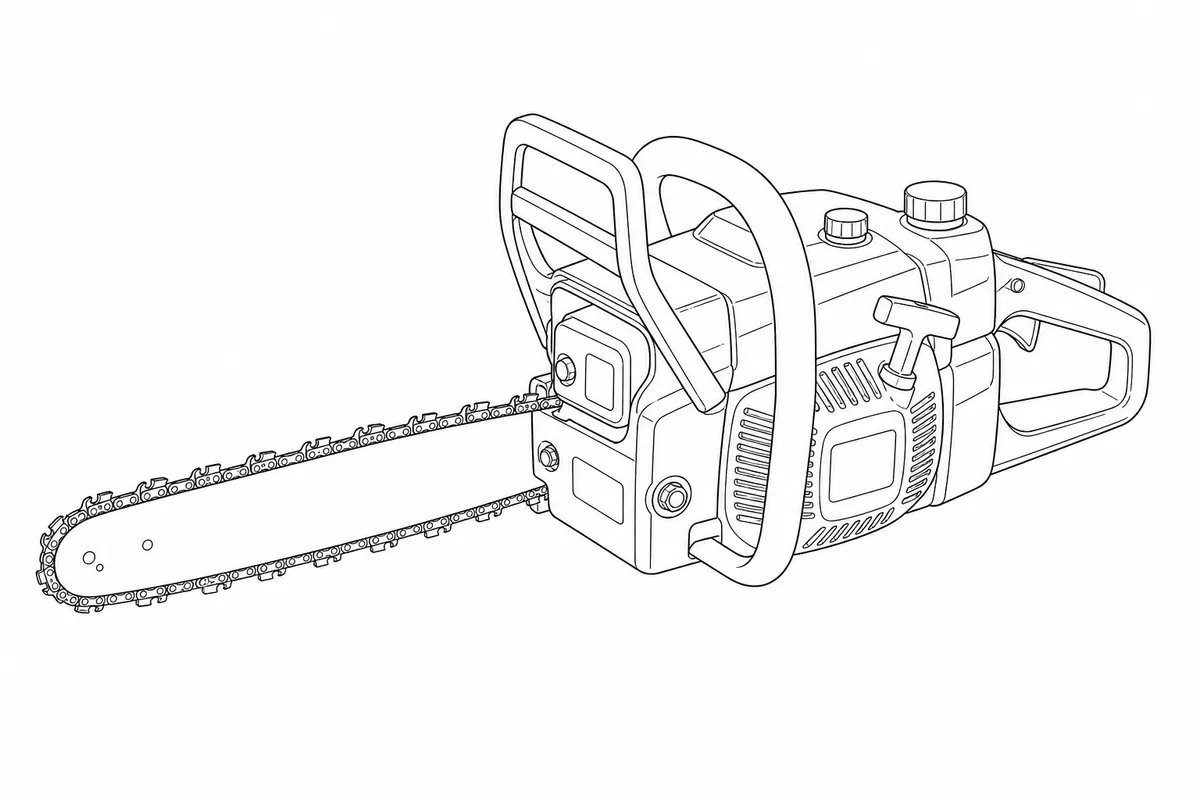
The symptom pattern
The saw is running, but it’s visibly smoking more than it should — and Qualcast’s own manual for the PC40 is worth reading carefully here, because it covers two completely different faults that both show up as “smoke” and doesn’t treat them as the same thing. One is in the engine troubleshooting table proper, under “Smokes Excessively.” The other is a warning tucked into the maintenance section about the bar and chain, which never uses the word “troubleshooting” at all but describes exactly the same visible symptom from an entirely different cause.
What’s actually happening
If the smoke is coming off the guide bar and chain rather than the engine, the manual’s maintenance section is explicit about why: “running the saw dry or with too little [bar and chain] oil will decrease cutting efficiency, shorten saw chain life, cause rapid dulling of chain, and lead to excessive wear of bar from overheating,” and states plainly that “too little oil is evidenced by smoke or bar discoloration” (the manual’s own spelling). That’s friction heat at the bar, not the engine burning anything wrong — the automatic oiler isn’t keeping the moving chain lubricated against the bar.
If the smoke is coming from the engine and muffler area, that’s the troubleshooting table’s own “Smokes Excessively” row, and it names two different causes: an incorrectly mixed fuel (the manual specifies a 40:1 petrol-to-oil ratio for this two-stroke engine), or the carburettor’s mixture adjustment itself being set wrong. The manual draws a clear line between the two — the fuel mixture is something you fix yourself by draining and remixing, while the carburettor adjustment is specifically routed to an Authorized Service Center rather than given as a user procedure.
Working through it
Let the saw cool and disconnect the spark plug lead before you check anything that doesn’t need the engine running. The first real step is working out which kind of smoke you actually have, because the two causes share nothing in common.
For bar/chain smoke: check the oil tank has chain, bar and sprocket oil in it, then start the saw briefly and watch the tip of the bar — the manual says a saw with clear oil passages will throw a visible spray of oil within seconds of starting. If it doesn’t, the automatic oiler isn’t doing its job and the bar is running dry, which is exactly what produces this kind of smoke and the bar discolouration that goes with it.
For engine smoke: check what fuel is actually in the tank. If you’re not certain it was mixed at 40:1, or it’s been sitting a while, drain it and refill with a freshly mixed batch at the correct ratio — this alone fixes the manual’s first named cause. If the smoke continues on correctly mixed fresh fuel, the remaining cause is the carburettor’s own mixture setting, and the manual doesn’t give a user adjustment for that; it goes to a service centre.
Verdict
Neither of this fault’s real causes needs a part, and both are worth ruling out before anyone touches a carburettor. Bar/chain smoke is an oil-tank and oiler check; engine smoke is first a fuel-mixture check. Only if correctly mixed fresh fuel doesn’t stop the smoke does this become a carburettor adjustment job, and the manual is specific that this one goes to an Authorized Service Center rather than being something to adjust at home.
Comments & Corrections
No comments yet. Had this fault yourself, or found something different? Tell us below.
Thanks — your comment has been sent for review. Comments are checked by a human before they appear, so expect a delay.