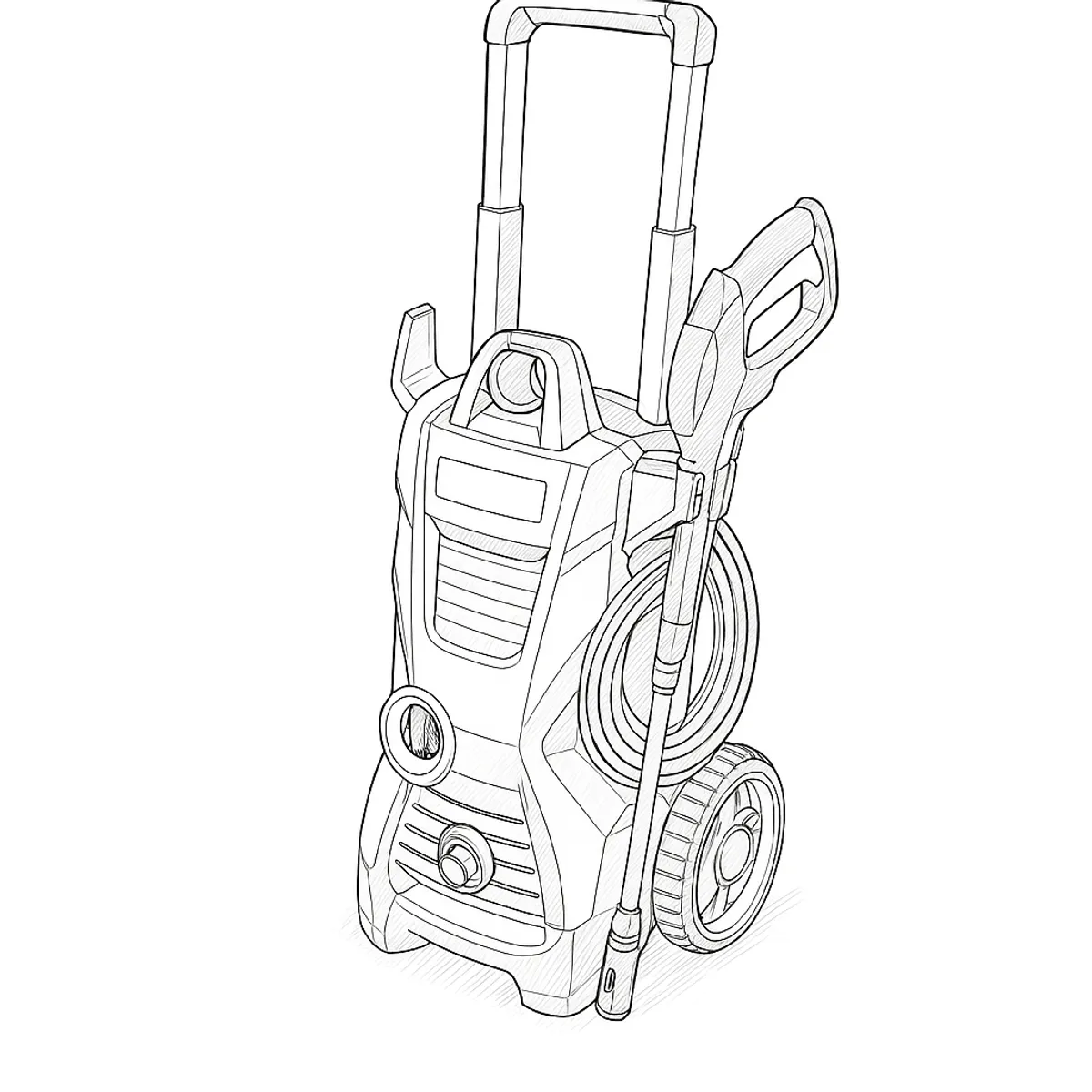
The symptom pattern
The machine starts, the motor sounds healthy, and water comes out of the lance — just not with any force. Sometimes it is a steady but feeble jet that will not shift anything; sometimes the pressure surges and drops in a rhythm, strong for a second and then soft. Owners often report it appearing after the washer has been stored over winter, or after a job where the water supply was drawn through a long, narrow hose.
The instinct is to assume the pump has worn out. It usually has not.
What’s actually happening
A pressure washer pump is a positive-displacement device: it can only pressurise the water it is actually given, and it needs that water solid and continuous. Three things break that.
The first is restriction upstream — a tap not fully open, a kinked or undersized supply hose, or the small sieve in the water inlet connection choked with grit. Starve the pump of flow and it cannot fill each stroke completely, and the pressure it produces collapses.
The second is restriction downstream, and on a K5 that means the high-pressure nozzle. The nozzle orifice is what converts pump pressure into a working jet; partially block it with grit or limescale and you get a poor, spitting spray from a pump that is working perfectly.
The third is air. Air is compressible in a way water is not, so a pump with air trapped in it spends each stroke squashing a bubble instead of moving a slug of water. This is why the symptom so often shows up on the first run of the season, and why Kärcher’s manual has a specific venting procedure for it.
Only after all three are cleared does the pump itself come into question, and the usual culprit there is the bypass valve — the part that recirculates water when the trigger is released. Owner teardowns consistently describe the plastic insert in the pump head swelling against oxidised aluminium and holding that valve open, so the machine recirculates when it should be pressurising.
Working through it
Do the free checks in order and resist skipping ahead. Tap and hose first, because it is the most common and the least interesting. Then the inlet sieve: flat pliers, straight out, rinse, back in. Then the nozzle, cleared with a needle from behind and flushed from the front. Then vent the machine by running it for up to two minutes with the high-pressure hose off, until the water leaving the outlet runs clear of bubbles.
The lance swap is the single most useful diagnostic on the list, because it splits the machine in half. Pressure with no lance but not with one tells you everything you need to know without taking a single fastener out.
Unplug the machine and release the trigger to dump stored pressure before disconnecting anything under the bonnet — this is mains electricity sitting next to a water circuit, and it deserves the respect.
Verdict
Worth working through properly, because the cheap causes are also the likely ones. A sieve, a nozzle and a vent cycle fix most of these outright and cost nothing. Freeing a sticking bypass valve is a realistic home repair on a machine you like. A full pump head assembly is the point at which the price of the part and the price of a new K5 need putting side by side before you commit.
Comments & Corrections
No comments yet. Had this fault yourself, or found something different? Tell us below.
Thanks — your comment has been sent for review. Comments are checked by a human before they appear, so expect a delay.