The symptom pattern
The machine starts, builds pressure, and washes normally on plain water. Switch the lance over to apply detergent and nothing comes through — no foam, no smell of it, just water. The bottle’s full and the machine otherwise seems completely healthy.
What’s actually happening
Kärcher’s own manual for the K3 states plainly that detergent can only be added when the device is run in low-pressure mode — the high-pressure setting physically won’t draw it, by design, regardless of whether anything else is wrong. That accounts for a good share of “no detergent” reports on its own: the lance is simply left on the wrong setting.
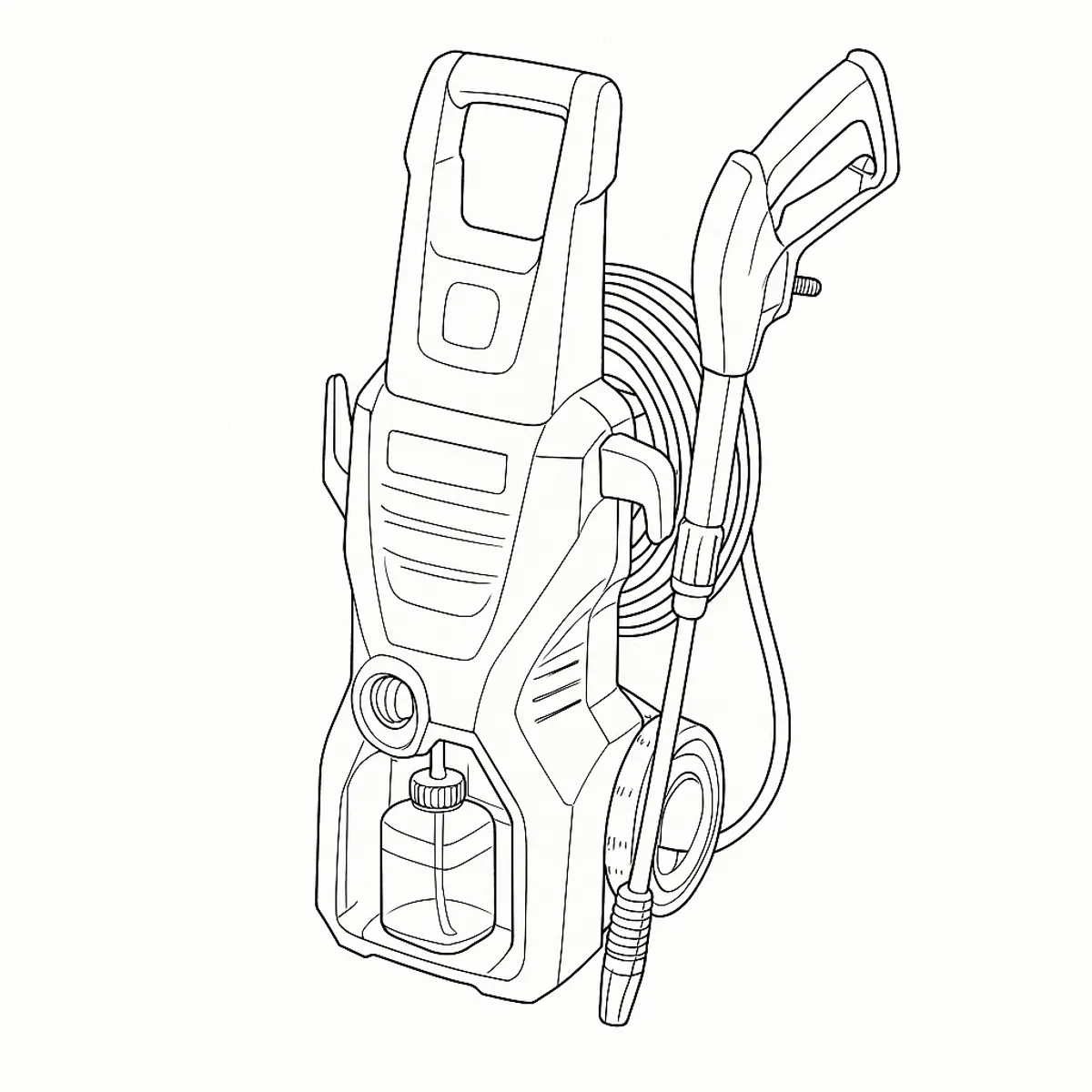
Past that, detergent reaches the machine through a thin suction hose and a small filter that sit down in the bottle. The manual’s maintenance section calls this filter out specifically as something to remove and clean, and flags the hose itself as something to check for kinks — it’s a narrow tube carrying a small volume of liquid, and either one blocking or folding is enough to stop suction completely while the rest of the machine works fine.
Working through it
Start with the setting, not the hardware: confirm the lance is turned to Mix (or your model’s equivalent low-pressure detergent position) before you suspect a blockage at all. If that’s already correct, isolate the machine and pull the suction hose to check it hasn’t kinked in storage — a common cause given how thin and flexible it is.
With the hose clear, turn to the filter on its end. It sits submerged in the bottle and picks up whatever settles in the detergent over time; pulling it off and rinsing it under a tap is usually all it takes. While you’re there, check the bottle isn’t running low enough that the pickup end has lifted clear of the liquid — an easy thing to miss once a bottle’s mostly used.
Verdict
Detergent infeed faults on the K3 are overwhelmingly a cleaning job, not a repair: a rinsed filter and an unkinked hose fix the great majority of these for nothing. Only a genuinely split or perished suction hose calls for a replacement part, and that’s a cheap one — there’s no reason to think the pump or the machine itself is at fault here.
Comments & Corrections
No comments yet. Had this fault yourself, or found something different? Tell us below.
Thanks — your comment has been sent for review. Comments are checked by a human before they appear, so expect a delay.