The symptom pattern
Water appears underneath the machine — sometimes a slow drip, sometimes enough to leave a puddle — and it’s still there when the K2 is switched off and unplugged. It’s often paired with a second symptom: the motor doesn’t stop promptly when the trigger is released, running on for a moment before it cuts out. Owners frequently notice the leak first and only connect the two later.
What’s actually happening
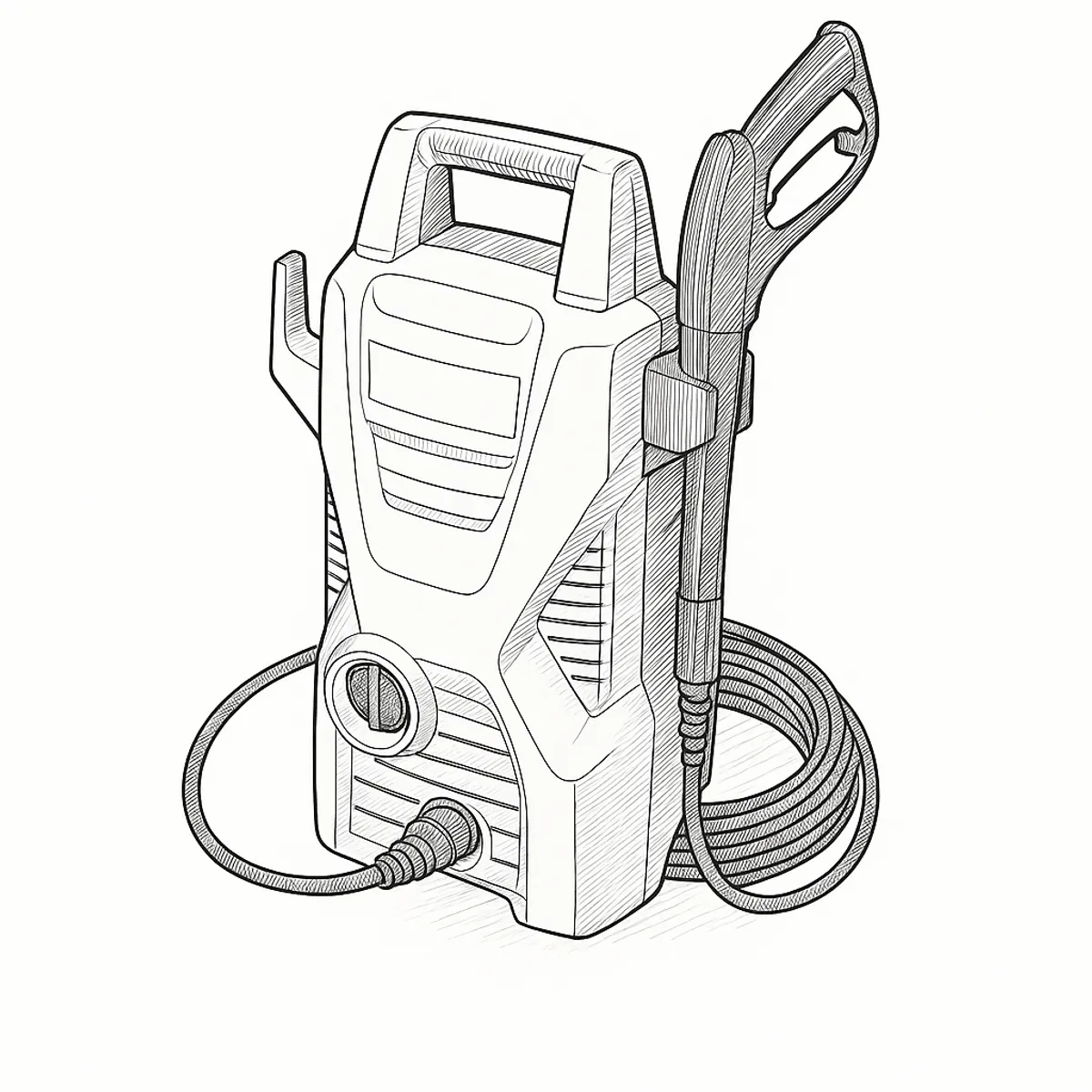
The K2, like the rest of the K-series, uses an auto-stop system: release the trigger, the outlet closes, pressure builds against a switch, and the motor stops. That switch lives inside a component at the top of the pump — often called the cylinder head or pressure-switch assembly — that senses pressure via an internal piston or diaphragm.
When that internal seal fails, two things happen together, which is why the symptoms so often travel as a pair: pressure leaks past it, so water finds its way out through a weep point on the housing even at rest, and the switch no longer gets a clean pressure signal, so the motor’s stop behaviour degrades too. It isn’t the same fault as the K4’s external pulsing — this leak point is inside the pump itself, and specifically inside a part that Kärcher builds as a single sealed unit rather than something meant to be opened.
Working through it
Rule out the cheap, external causes first, exactly as you would on any K-series machine: dry it off, run it, and watch the gun, lance, hose ends and couplings for drips before you assume anything internal has failed. If it’s dry there and the water is clearly coming from underneath the pump body itself, that points at the cylinder head.
Getting further requires opening the pump, and this is where the diagnosis also becomes the verdict. On the machine where this was documented in full, the fault traced to a small hole in the black plastic pressure-switch housing — visible once the pump was stripped, with the working assumption being a failed internal piston or diaphragm seal behind it. The next step, trying to get into that housing to replace the seal, is where it stops: the component doesn’t come apart. It’s solvent-welded as a single unit.
Verdict
If you get this far and confirm the leak is the cylinder head, the honest answer is that it’s a parts-availability problem more than a repair problem. The assembly is sold as a complete replacement, and in the documented case it ran to roughly half the price of a new K2 bought outright — which makes replacing the whole machine the more obvious choice for most owners. That owner’s own conclusion was blunt: having priced the part, they said they could not recommend Kärcher to anyone looking for a pressure washer. Price the head against a new machine before you decide, because part prices move, but go in expecting the arithmetic to favour replacement. Isolate the machine at the plug before opening the pump — these are low-voltage internals, but they sit right next to the mains lead and switch.
Comments & Corrections
No comments yet. Had this fault yourself, or found something different? Tell us below.
Thanks — your comment has been sent for review. Comments are checked by a human before they appear, so expect a delay.