The symptom pattern
The scarifier switches on and the motor clearly runs, but the tine shaft underneath isn’t turning the way it should — either it never starts rotating, or it turns briefly and then stops. The lawn comes out untouched even though the machine sounds like it’s doing something. Hyundai’s troubleshooting table for this model treats “tines will not rotate” as its own fault, with two named causes.
What’s actually happening
The first cause is the more mundane one: dirt and debris packed into the gaps between the tines, physically jamming them from turning. The second is distinct from that — vines, grass or other debris wrapped directly around the tine shaft itself, which can stop rotation even if the tines between them look reasonably clear. Both are named separately in the table because they need slightly different fixes: clearing debris from around the tines versus cleaning the shaft they’re mounted on.
Neither cause involves anything electrical or mechanical failing — this is a blockage fault, not a motor or drive problem, and the manual doesn’t suggest otherwise.
Working through it
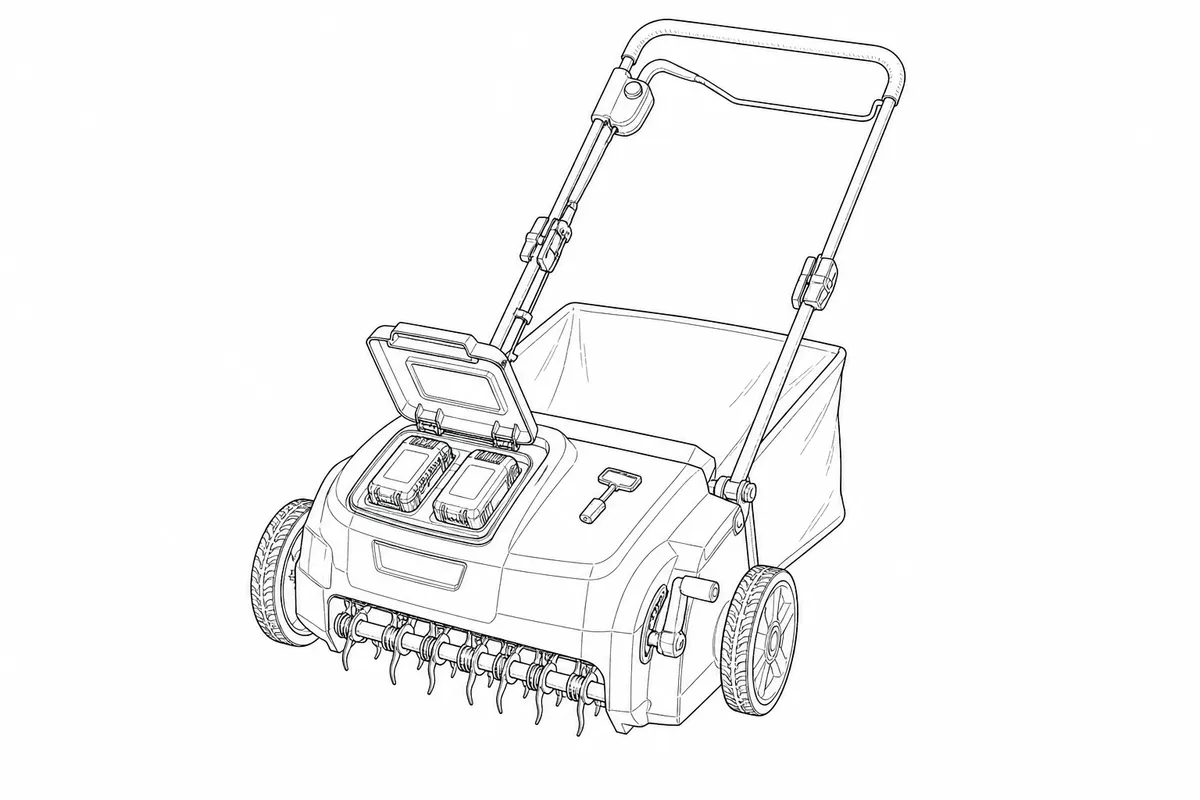
Release the bail first so the tines aren’t being driven, then tip the machine to get a clear look underneath. Before your hands go anywhere near the tine shaft, open the battery hatch, remove the safety key, then take the battery packs out — the manual states plainly that the safety key comes out before batteries are installed or removed, and it’s the same isolation this job needs before you clear anything by hand.
Check the tines first for compacted dirt or debris sitting in the gaps between them, and clear it out. If they still don’t spin freely by hand once that’s done, look specifically for grass, vines or other debris wound around the shaft itself rather than just caught between the tines — that needs cleaning off the shaft directly, not just picking debris out from around the tines.
Refit the battery packs first, then reinstall the safety key last — the manual’s own installation sequence does it in that order — and test on a small clear patch of lawn before going back over the area you were working on.
Verdict
This is a cleaning job, not a repair — both causes the manual lists cost nothing and need no parts. The only real discipline here is doing the battery-and-safety-key removal first, in that order, before working anywhere near the tines, exactly as the manual sets out for handling the batteries in general.
Comments & Corrections
No comments yet. Had this fault yourself, or found something different? Tell us below.
Thanks — your comment has been sent for review. Comments are checked by a human before they appear, so expect a delay.