The symptom pattern
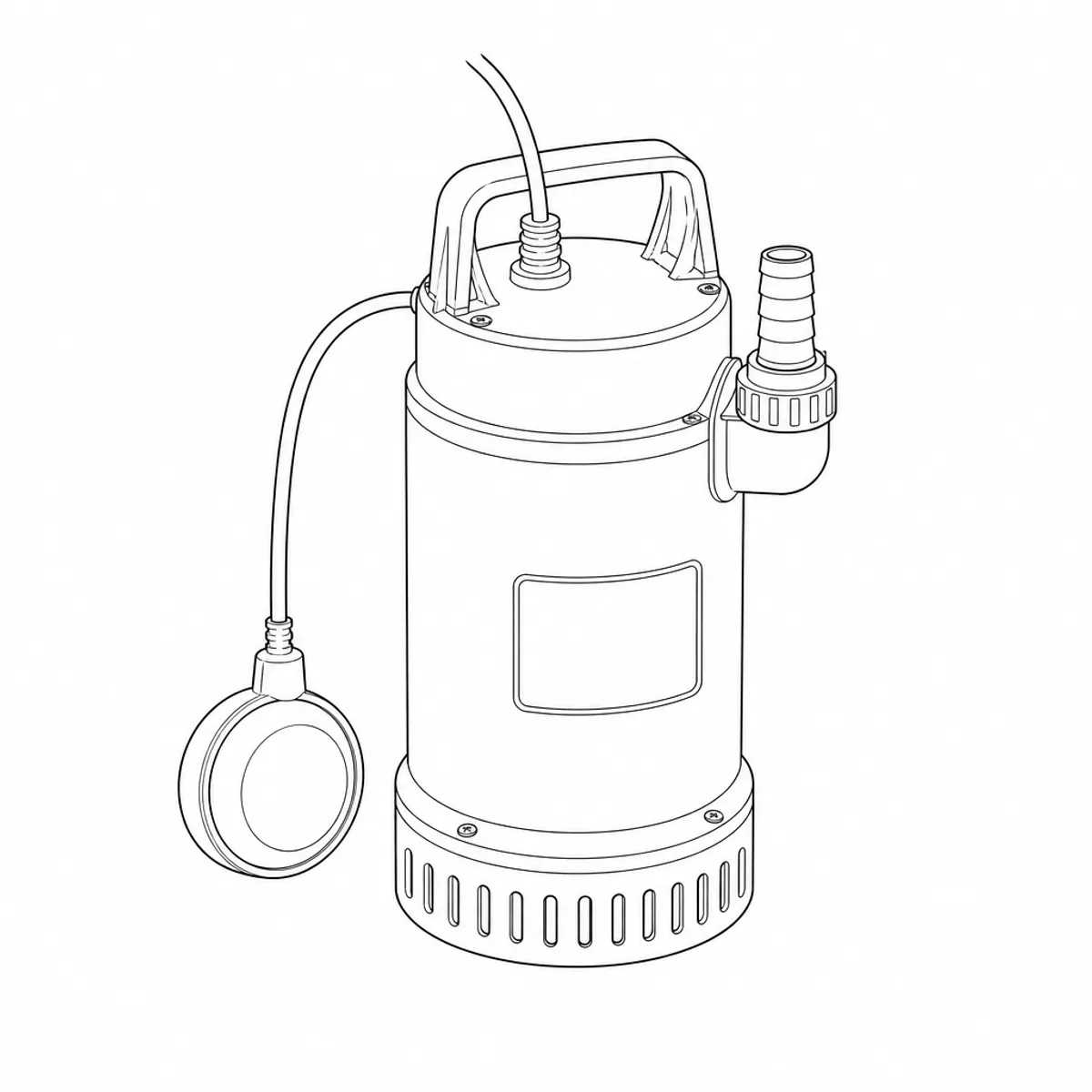
The pump is clearly powered and running — you can hear the motor — but little or nothing comes out of the outlet hose, or the flow is far weaker than it should be. It’s a different complaint from the pump not starting at all, and Hyundai’s own troubleshooting table for this model treats it as a separate fault with its own set of causes.
What’s actually happening
The HYSP400CD is rated for a maximum pumping head of 5.8m. Ask it to lift water further than that — over a tall wall, up into an elevated tank — and it can run perfectly normally while moving very little water, because the job is outside what the pump is built to do. That’s the first thing worth ruling out, since it costs nothing to check against the spec plate.
Past that, the manual lists three more causes, in roughly the order they’re worth checking. A blocked inlet or outlet is the simplest: debris, silt or a flattened hose stopping water getting in or out even though the motor is turning. Trapped air inside the pump housing is the one that catches people out — the impeller can spin without actually moving water if air has formed a pocket inside the casing, which is why the manual’s specific fix for this is physically tilting the pump as it goes back into the water rather than lowering it straight down. The last cause the table gives, a damaged impeller, is the one it doesn’t offer a home fix for at all.
Working through it
Unplug the pump before touching it. Check the job against the spec plate — 5.8m maximum head — before anything else; if the hose run is higher than that, the pump isn’t faulty, it’s just undersized for where it’s been asked to work. Pull it out of the water and check the inlet at the base for debris or sediment, and stand it on a platform or bricks if it’s been sitting flat on silt or mud, which the manual also lists as good practice generally. Follow the hose run for a kink or crush point, and check nothing is blocking the outlet end.
If the inlet, outlet and hose are all clear and the head is within spec, lift the pump mostly out of the water and lower it back in at an angle rather than straight down, to let any trapped air escape instead of sitting in a pocket inside the casing. Switch on and check flow again.
If none of that brings the flow back, the manual’s own troubleshooting table stops at “consult your dealer” for a damaged impeller — it doesn’t give a user procedure for opening the pump housing, so that’s the point to stop rather than start dismantling it.
Verdict
Most of what causes this is free to fix: clear the inlet, straighten the hose, or re-angle the pump to clear trapped air. Check the head height against the spec plate before anything else — a lot of “faulty” reports on submersible pumps turn out to be asking a 5.8m-head pump to do a taller job. A genuinely damaged impeller is the one cause here with no DIY fix, and on a pump at this price point, replacing the unit is the realistic call rather than sourcing a part for it.
Comments & Corrections
No comments yet. Had this fault yourself, or found something different? Tell us below.
Thanks — your comment has been sent for review. Comments are checked by a human before they appear, so expect a delay.