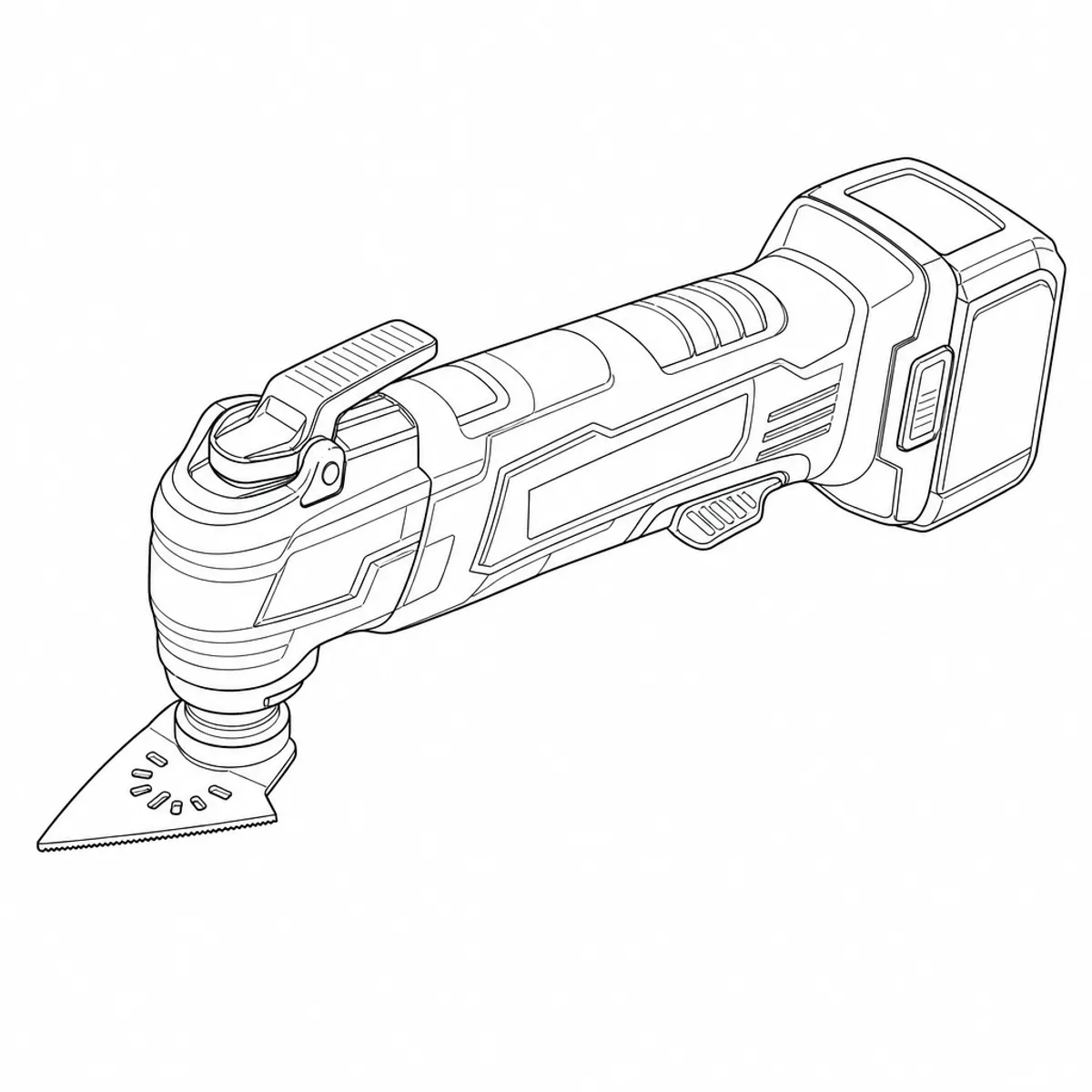
The symptom pattern
You’ve been working the multi-tool at a gentle, careful pace — a light squeeze on the trigger for a delicate sanding pass or a controlled cut — and partway through it starts running hot and losing power. It feels like exactly the moment you’d expect a tool to fail. DeWalt’s own manual describes this specific pattern directly, rather than leaving it as an unexplained symptom.
What DeWalt’s own manual says
The DCS355’s trigger is fully variable: “The further the trigger switch is depressed the faster the tool will operate.” That means a careful, partial squeeze — exactly the technique many people use for delicate work — runs the motor at its lower speed range. DeWalt’s maintenance section addresses what that does over time in so many words: “If the tool overheats, especially when used at low speed, set the speed to maximum and run it with no load for 2–3 minutes to cool the motor. Avoid prolonged usage at very low speeds.”
The same section connects a second factor to the same overload: “Excessive force will reduce the working efficiency and cause motor overload. Replacing the accessory regularly will maintain optimum working efficiency.” A blunted blade or a worn-through sanding sheet needs more force to do the same job, which pushes the motor harder on top of whatever the trigger speed is already asking of it.
Working through it
Think back to how you were running the trigger when it started running hot — a light, sustained partial squeeze matches the exact condition the manual names. Stop the cut, release the trigger, then press it fully for maximum speed and run the tool with no load — nothing touching the workpiece — for the full 2–3 minutes DeWalt specifies, not a token few seconds. While it’s cooling, it’s worth checking the accessory: if the blade’s gone blunt or the sanding sheet is worn through, swap it, since the extra force needed to cut with a tired accessory adds directly to the overload the manual describes. Once it’s cooled and the accessory’s fresh, go back to the job favouring a higher trigger position where the work allows it.
Verdict
This is explicitly not treated as a fault in DeWalt’s own documentation — it’s a named thermal limit with a specific, free recovery procedure, not a part to replace or a repair to book. Keeping accessories sharp and avoiding long stretches at a light partial-trigger speed should stop it coming back. If the tool keeps overheating after a genuine full-speed, no-load cool-down with a fresh accessory fitted, that’s a different problem from the one this specific guidance covers.
Comments & Corrections
No comments yet. Had this fault yourself, or found something different? Tell us below.
Thanks — your comment has been sent for review. Comments are checked by a human before they appear, so expect a delay.